iran-war
Featured News
Iran Launches Massive Missile Attack Across Gulf Region, Explosions Reported in Qatar, Bahrain, Kuwait and Iraq
Key takeaways from 14-point memo discussed between US and Iran
Washington close to Iran deal to end war: Axios
Iran’s Araghchi set to land in Islamabad tonight as fresh US talks anticipated
White House says Steve Witkoff, Jared Kushner to visit Pakistan for second round of direct talks with Iran
US to ‘shoot and kill’ Iranian boats laying mines in Hormuz, Trump says
Trump says ceasefire with Iran will extend until Tehran submits proposals
Iran threatens to end Gulf countries’ oil production if attacked from their territory
Islamabad Prepares for High-Stakes US–Iran Talks Amid Fragile Ceasefire
Khawaja Asif Calls Israel “A Curse on Humanity” Amid Middle East Violence
Pakistan has blamed Israel for escalating tensions in the Middle East
Iran rejected the 45-day temporary deal and sent back a list of its own
Trump Warns Iran ‘Can Be Taken Out’ as Tuesday Deadline Nears Amid Ongoing Talks
“Islamabad Accord: Pakistan Proposes Immediate Ceasefire Plan to Iran and US”
Trump Threatens to Strike Iran “Back to the Stone Ages” if No Deal Is Reached
Iran Claims Strikes on Israeli Naval and Air Targets in Mediterranean
Trump Announces 10-Day Pause on Iran Strikes Amid Ongoing Negotiations
Israel’s Army Under Pressure as Troop Shortage Sparks Concern
At Least 12 Injured in Central Israel After Missile Strike from Iran

Grok AI Reportedly Used in U.S. Military Strikes on Iran, Court Filing Reveals
6/17/2026, 1:00:00 PM
U.S. Government Reveals Use of Elon Musk’s Grok AI in Military Operations Against Iran A legal filing reviewed by AFP has revealed that Elon Musk’s artificial intelligence system, Grok, has been used in U.S. military operations targeting Iran. The June 15 court brief defends the use of gas turbines powering a large xAI data center owned by Musk’s company. The turbines are currently under environmental scrutiny in a lawsuit. The U.S. Department of Justice argued that shutting down the facility could harm “American national, economic, and energy security” by disrupting AI systems that support military operations. According to the filing, Pentagon AI chief Cameron Stanley testified that Grok is already integrated into Project Maven, the U.S. military’s AI-assisted targeting program, which was previously powered by Anthropic’s Claude model. Stanley’s statement claims that the system, referred to as Maven Smart Systems, allowed U.S. forces to deploy more than 2,000 munitions across 2,000 targets within 96 hours during an operation described as “Epic Fury.” He also highlighted improved efficiency achieved through what he called the “Grok Gov Model.” Meanwhile, the NAACP has filed a lawsuit against xAI, accusing the company of operating multiple gas turbines without proper environmental permits, allegedly impacting predominantly Black neighborhoods. xAI has responded by stating that the turbines are temporary and mobile, and therefore not subject to the same regulations. The report also notes a shift in Pentagon partnerships. In February, the U.S. government ended contracts with Anthropic after the company declined to permit its AI systems for fully automated strikes or large-scale surveillance of Americans. Following this, the Pentagon reportedly turned to other AI providers, including Google, OpenAI, and xAI. Earlier concerns have also been raised within the tech sector, with hundreds of employees at Google reportedly urging the company not to involve its AI systems in classified military operations. The U.S. military’s broader adoption of AI continues to evolve, with reports indicating that Claude was still being used in operations in Iran as recently as March. Musk’s xAI has also seen major corporate restructuring, as it was merged with SpaceX earlier this year, which recently completed a historic IPO.
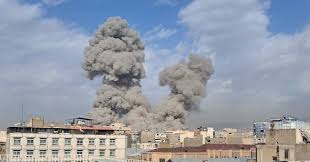
Iran Launches Massive Missile Attack Across Gulf Region, Explosions Reported in Qatar, Bahrain, Kuwait and Iraq
Iran Launches Missile Barrage Across Gulf Region, Explosions Reported in Qatar, Bahrain, Kuwait and Iraq DOHA/TEHRAN: Tensions in the Middle East escalated dramatically after Iran launched a large-scale missile attack targeting military and strategic locations across the Gulf region, with explosions reported in Qatar, Bahrain, Kuwait and Iraq. According to regional security sources, air-defense systems were activated across several countries after multiple missiles and drones were detected heading toward areas believed to host U.S. and allied military forces. Loud explosions were heard in Doha, Manama and parts of Iraq as defensive systems intercepted incoming threats. Qatari authorities confirmed that their air defenses successfully engaged several missiles, while Bahrain and Kuwait also reported defensive operations to protect critical infrastructure and military facilities. Security forces across the region were placed on high alert, and additional protective measures were implemented around airports, oil installations and government buildings. Iran’s Islamic Revolutionary Guard Corps (IRGC) claimed responsibility for the attacks, describing them as retaliation for recent military actions against Iranian interests. Iranian state media said the operation demonstrated Tehran’s willingness to respond forcefully to perceived threats. The missile barrage comes amid growing tensions between Iran and the United States, following weeks of heightened military activity and stalled diplomatic efforts. Analysts warn that the latest escalation could increase the risk of a broader regional conflict involving multiple countries. Several international airlines adjusted flight routes through the Gulf as a precaution, while global leaders urged restraint and called for an immediate de-escalation of hostilities. The United Nations expressed concern over the situation and renewed calls for dialogue. The attacks have also raised concerns about the security of energy infrastructure in the Gulf region, which plays a vital role in global oil and gas supplies. Experts warn that any further escalation could disrupt shipping routes and impact international energy markets. As governments across the Middle East monitor the situation closely, military forces remain on heightened readiness amid fears that additional retaliatory actions could further destabilize an already volatile region.
6/3/2026, 5:00:00 AM
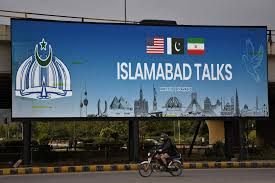
Key takeaways from 14-point memo discussed between US and Iran
Key takeaways from 14-point memo discussed between US and Iran
5/6/2026, 11:30:00 PM
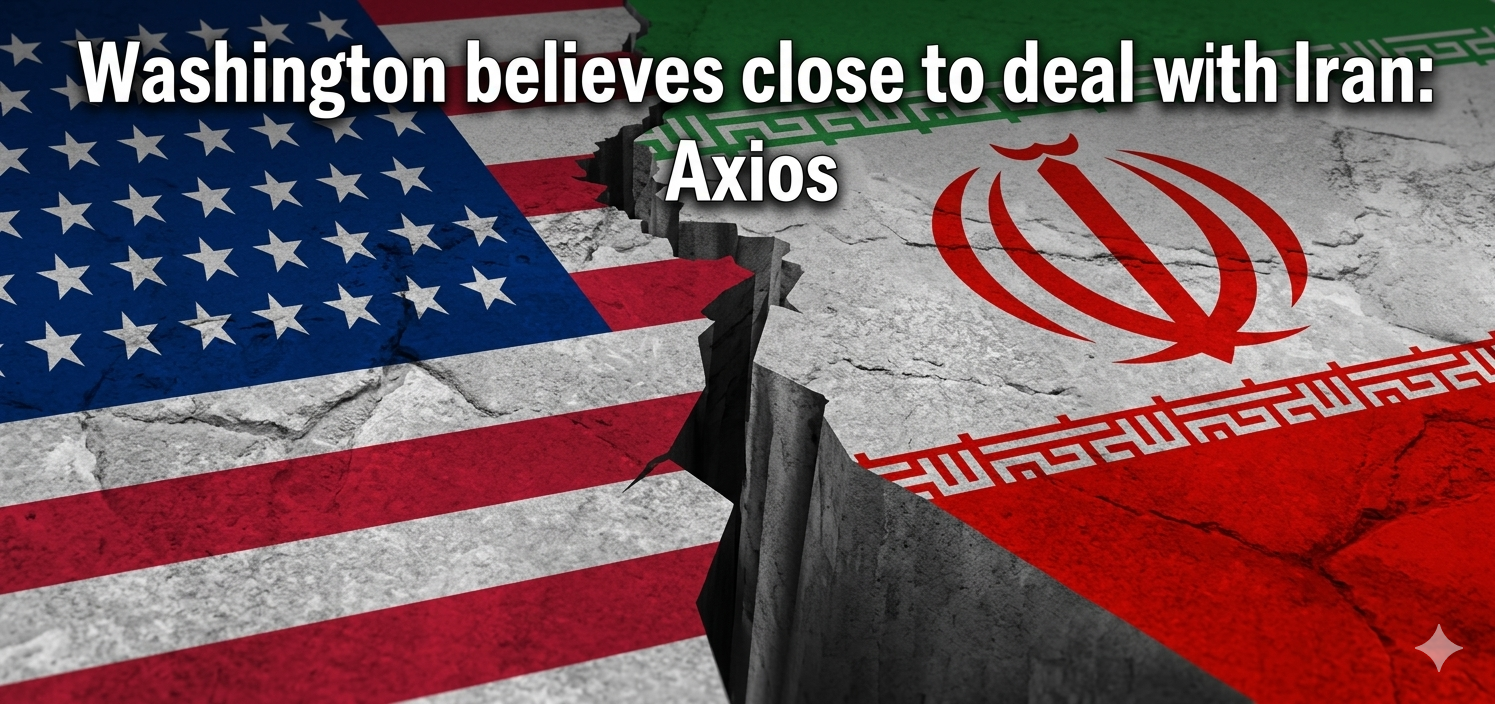
Washington close to Iran deal to end war: Axios
US–Iran Deal Near? Washington Awaits Tehran’s Response on Strait of Hormuz Ceasefire Plan Washington believes it is nearing a potential agreement with Tehran to reopen the Strait of Hormuz and bring an end to the ongoing conflict, according to a Wednesday report by Axios citing two US officials. The report states that both sides are close to finalizing a brief “one-page memorandum of understanding” aimed at ending the war while establishing a framework for more detailed nuclear negotiations. Under the proposed arrangement, Iran would agree to temporarily halt its nuclear enrichment activities, while the United States would release billions of dollars in frozen Iranian assets. Washington is currently waiting for Tehran’s response on several critical points, expected within the next 48 hours. Although no formal agreement has been reached yet, sources indicated that this is the closest the two sides have come to a deal since the conflict began. US President Donald Trump has repeatedly suggested that an agreement is within reach, though previous efforts have not resulted in a breakthrough. Earlier this week, Trump launched “Project Freedom” to assist ships navigating the strait, but the operation was halted after just one day following requests from mediators, including Pakistan. He stated that “significant progress” had been made toward a final agreement with Iran. According to Axios, the proposed 14-point memorandum is being negotiated by US envoys Steve Witkoff and Jared Kushner, in coordination with Iranian officials through both direct and mediated channels. In its current draft, the agreement would declare an end to hostilities and initiate a 30-day negotiation period aimed at reaching a comprehensive deal. This would include reopening the strait, placing limits on Iran’s nuclear programme, and easing US sanctions. However, efforts to restore normal shipping activity have so far struggled, with continued attacks reported in the region. In a recent incident, a French shipping company confirmed that one of its container vessels was struck in the strait, with injured crew members evacuated. Iran had previously presented its own 14-point proposal, suggesting that nuclear discussions be postponed until after the war and shipping issues were resolved. Speaking during a visit to China, Iran’s Foreign Minister Abbas Araqchi did not directly address Trump’s latest remarks but emphasized that Tehran remains committed to achieving a “fair and comprehensive agreement.”
5/6/2026, 11:00:00 PM
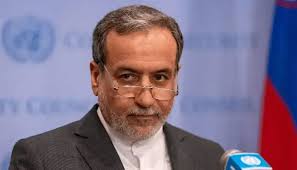
Iran’s Araghchi set to land in Islamabad tonight as fresh US talks anticipated
Araghchi Likely to Land in Islamabad as Pakistan Pushes for Renewed US-Iran Dialogue Abbas Araghchi is expected to arrive in Islamabad on Friday night as diplomatic momentum builds for a possible second round of talks between United States and Iran. While Iranian officials describe the visit as part of a regional tour including Muscat and Moscow, discussions are expected to focus on rising tensions and ongoing conflict in the Middle East. It remains unclear whether Araghchi will directly meet US representatives. Sources say a US logistics and security team is already in Islamabad, signaling preparations for potential negotiations facilitated by Pakistan. Earlier, Ishaq Dar emphasized the need for continued dialogue during a call with Araghchi, who praised Pakistan’s constructive role in mediating between Washington and Tehran. Despite a temporary ceasefire brokered by Shehbaz Sharif, tensions persist following disputes over the Strait of Hormuz and military actions by both sides. However, diplomatic efforts continue, with Donald Trump recently extending the truce to allow further negotiations.
4/24/2026, 11:45:00 PM
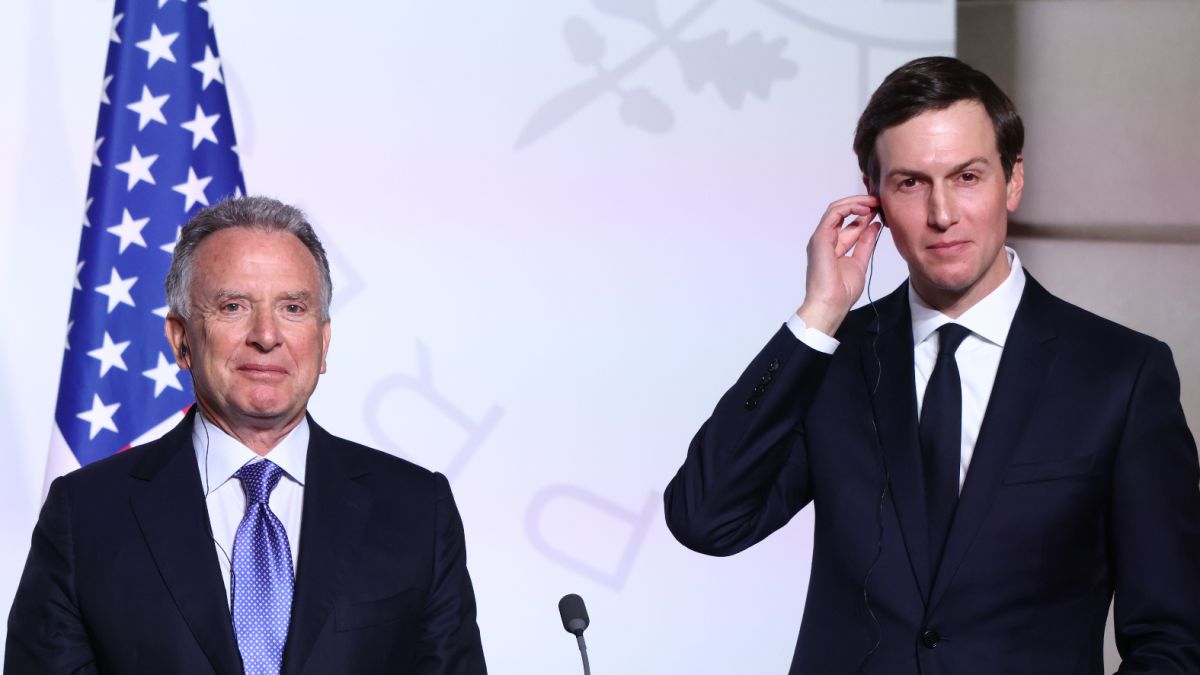
White House says Steve Witkoff, Jared Kushner to visit Pakistan for second round of direct talks with Iran
White House Press Secretary Karoline Leavitt said on Friday that US Special Envoy on the Middle East Steve Witkoff and President Donald Trump’s adviser Jared Kushner would be leaving for Pakistan on Saturday for a second round of talks with Iran. The White House has confirmed that senior US officials, including Steve Witkoff and Jared Kushner, will travel to Pakistan on Saturday to initiate a second round of talks with Iran. According to Press Secretary Karoline Leavitt, the discussions will involve direct engagement with Iranian representatives, facilitated by Pakistan, which she described as a “key and trusted mediator” in the process. The visit follows initial negotiations held in Islamabad earlier this month that ended without a deal but kept diplomatic channels open. US leadership, including Donald Trump, remains on standby in Washington, awaiting updates, while further high-level participation is being considered if progress is made. Meanwhile, Iran’s Foreign Minister Abbas Araghchi is also expected in Islamabad as part of a regional tour. While Tehran has framed the visit as bilateral consultations, recent communications indicate both sides are open to continued dialogue. Pakistan has intensified its diplomatic efforts in recent days, aiming to revive negotiations and reduce tensions following disputes over the Strait of Hormuz and US sanctions. Despite lingering mistrust, both Washington and Tehran have signaled cautious optimism, raising hopes that the upcoming talks could move the situation toward stability.
4/24/2026, 11:00:00 PM
US to ‘shoot and kill’ Iranian boats laying mines in Hormuz, Trump says
US to ‘shoot and kill’ Iranian boats laying mines in Hormuz, Trump says US President Donald Trump has ordered the United States Navy to “shoot and kill” any Iranian boats attempting to lay mines in the Strait of Hormuz, raising concerns over the fragile ceasefire between the two countries. In a social media post, Trump said US forces are already clearing mines from the waterway and will intensify operations. The Strait of Hormuz, a critical global oil route, has become a major flashpoint after Iran temporarily closed it during the recent conflict. The closure disrupted nearly 20% of global oil and gas supply, driving fuel prices higher and increasing pressure on Washington. Although a ceasefire was reached last month, tensions remain high as the US continues a naval blockade on Iran-linked vessels, while Tehran has detained several foreign ships near the strait. Iran has demanded the lifting of the blockade before resuming negotiations and has warned it will respond to any US aggression. Despite Trump’s claims of divisions within Iran’s leadership, officials have presented a united stance against US actions. Iranian President Masoud Pezeshkian rejected suggestions of internal rifts, stressing national unity and vowing a strong response to any threats. The ongoing standoff and “duelling blockades” have heightened fears of renewed conflict, with no clear timeline for the extended ceasefire.
4/24/2026, 12:20:00 PM
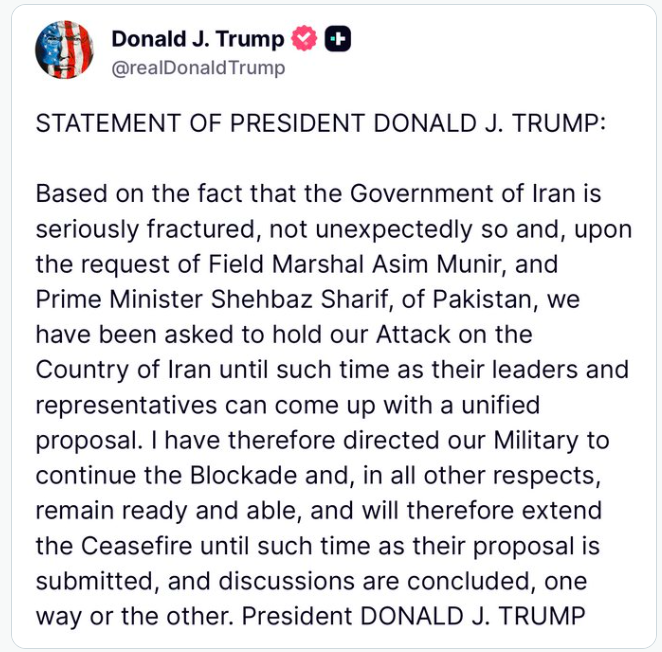
Trump says ceasefire with Iran will extend until Tehran submits proposals
Trump says ceasefire with Iran will extend until Tehran submits proposals Donald Trump has announced that the ceasefire with Iran will remain in place until Tehran submits its proposals, just hours before the truce was due to expire. In a statement shared on Truth Social, Trump said the decision came amid internal divisions within the Iranian government and followed requests from Asim Munir and Shehbaz Sharif. He noted that the United States agreed to pause any military action to give Iran’s leadership time to present a unified proposal. Trump added that while the ceasefire is being extended, US forces will continue maintaining a blockade and remain fully prepared. He emphasized that the truce will stay in effect until Iran submits its proposal and negotiations are brought to a conclusion, regardless of the outcome.
4/22/2026, 2:00:00 AM
Iran threatens to end Gulf countries’ oil production if attacked from their territory
Iran threatens to end Gulf countries’ oil production if attacked from their territory Islamic Revolutionary Guard Corps has warned that oil production across the Middle East could be brought to a halt if Iran comes under attack from bases located in neighboring Gulf countries, according to AFP. “The southern neighbors must understand that if their territory or facilities are used by Iran’s enemies to launch attacks, they will have to say goodbye to oil production in the region,” said Majid Mousavi, commander of the Guards’ aerospace division, as reported by Fars News Agency.
4/22/2026, 1:30:00 AM
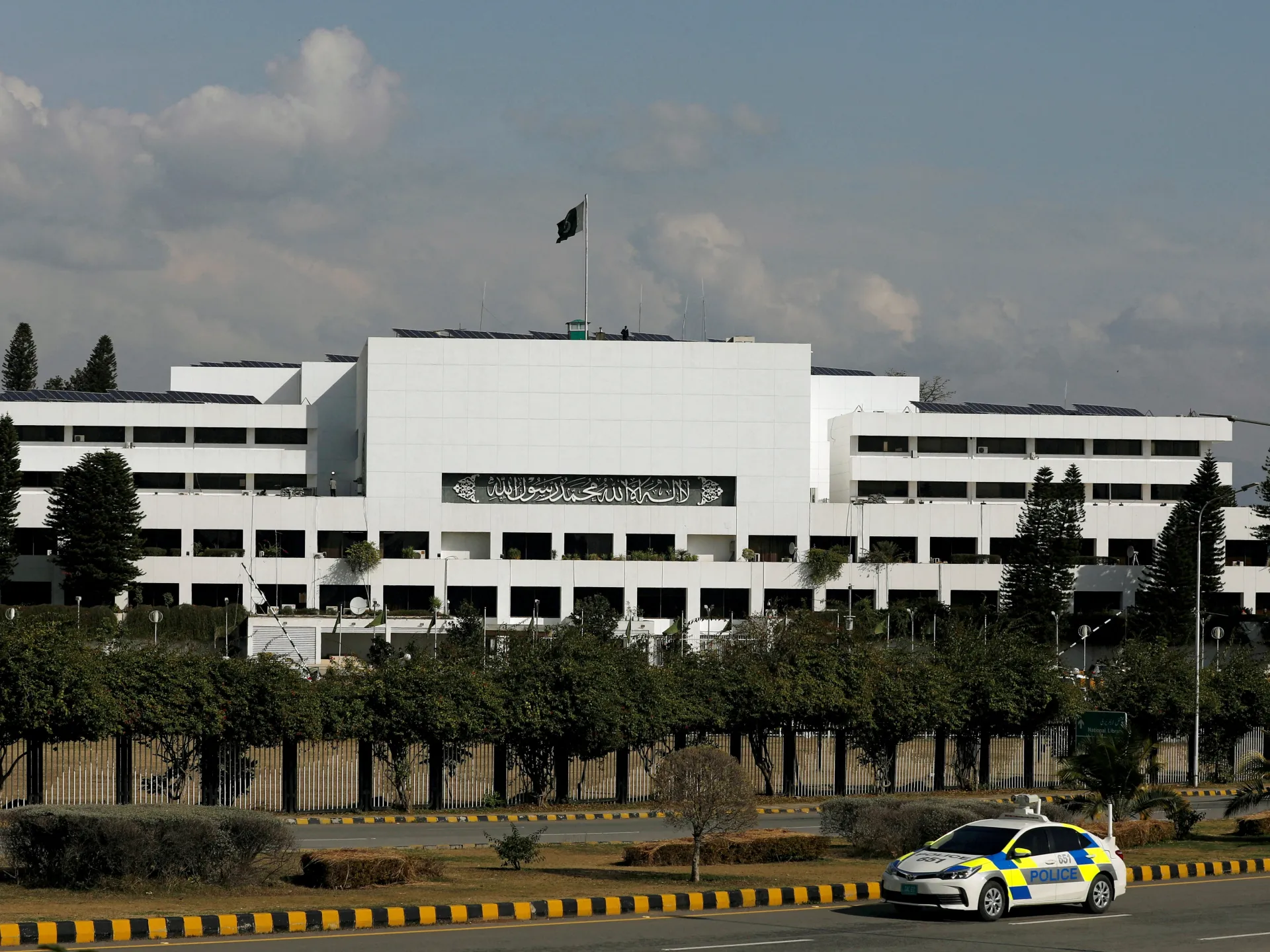
Islamabad Prepares for High-Stakes US–Iran Talks Amid Fragile Ceasefire
Islamabad Prepares for High-Stakes US–Iran Talks Amid Fragile Ceasefire As American and Iranian delegations gear up for a weekend of high-level talks in Islamabad, analysts caution that expectations for a major breakthrough remain tempered. The planned meeting on Saturday follows a two week ceasefire brokered earlier this week by Pakistan a rare diplomatic opening after weeks of military escalation in the Middle East. However, the truce which came into effect Tuesday night is already showing signs of strain. Israel’s ongoing bombardment in Lebanon, which Pakistan and Iran assert falls outside the parameters of the ceasefire, has complicated efforts to stabilize the fragile peace. Washington, meanwhile maintains it never agreed to restrict Israeli actions. Experts emphasize that the foundational conditions for productive dialogue are not yet fully in place. “It’s too early to predict the outcome… the ceasefire did not last even a single day,” they note referencing the continued violence in Lebanon. “That must stop if the Islamabad talks are to proceed with purpose.” The ceasefire though short-lived, temporarily eased tensions that had rattled global energy markets and heightened fears of wider regional conflict. Yet lingering mistrust between Tehran and Washington combined with unresolved disputes over sanctions, nuclear development and regional security including the situation in Lebanon, underscore the fragility of the process. From the American side, the delegation is expected to include senior officials, while Iran has signaled it will send a high-level team, though official confirmation is pending. Security preparations are already underway in Islamabad with police conducting vehicle inspections at checkpoints to ensure the safety of delegates and maintain public order. Experts stress that the talks are unlikely to yield a formal peace agreement at this stage. Instead, they view the negotiations as an initial test of whether diplomacy can take root amid deep-rooted mistrust. Analysts point to structural constraints: “The only realistic outcome at this stage is one that aligns with the UN Charter. Iran will not abandon uranium enrichment, nor will the US permit a nuclear armed Iran.” They further note that sanctions relief in the immediate term is improbable, even as both sides signal willingness to explore pathways that avoid military escalation. Pakistan as mediator is primarily focused on sustaining the ceasefire and ensuring talks remain on track. Observers explain that the immediate goal is continuity: “The ceasefire is tenuous due to the underlying complexities. The most meaningful outcome would be a sustained negotiation process, gradually addressing contentious issues.” Early progress could pave the way for an extension of the truce, creating space for constructive discussion on critical matters such as a permanent ceasefire, reopening the Strait of Hormuz, and finding common ground on nuclear enrichment and sanctions. While predicting timelines remains difficult, visible momentum in these areas would signal a significant step forward. In a region where trust is scarce and stakes are high, the Islamabad talks represent more than a diplomatic formality—they are a measure of whether careful negotiation can begin to replace confrontation. As the world watches, Pakistan’s role as mediator will be tested, and the outcome, however incremental, may set the tone for future US Iran engagement.
4/10/2026, 1:00:00 AM
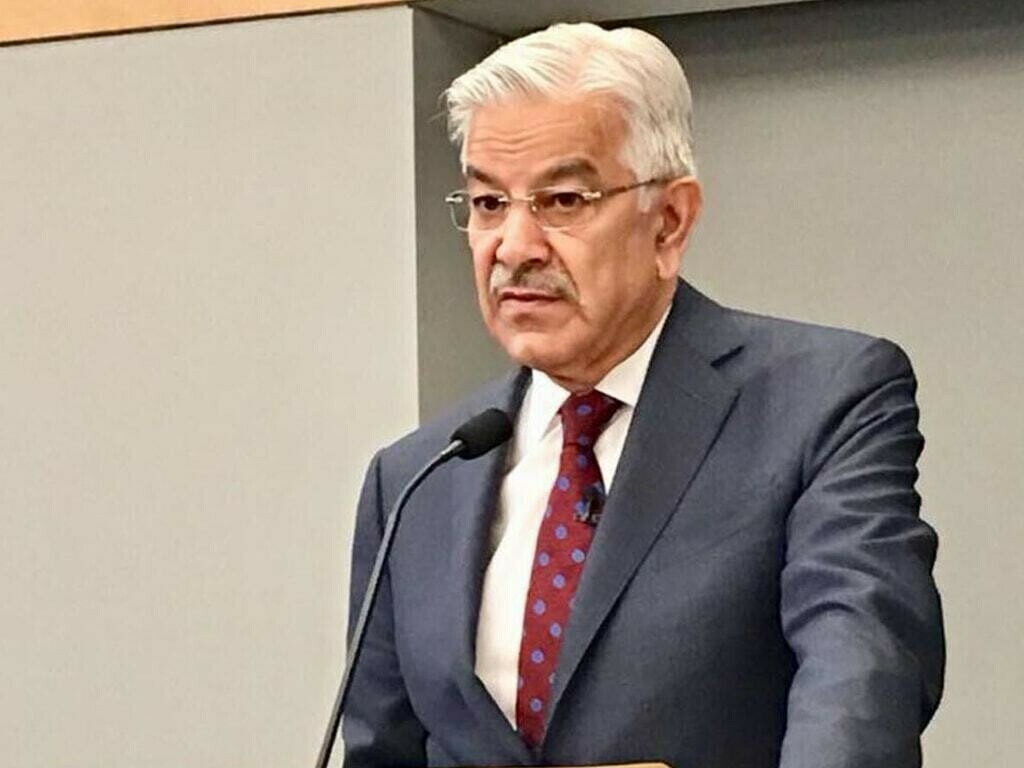
Khawaja Asif Calls Israel “A Curse on Humanity” Amid Middle East Violence
Pakistan’s Defence Minister Brands Israel “Evil and a Curse on Humanity,” Accuses It of Genocide in Middle East Conflicts Pakistan’s Defence Minister Khawaja Asif has strongly condemned Israel’s military actions in the Middle East, describing the country’s conduct as “evil” and “a curse for humanity” in a social media post amid ongoing peace negotiations in Islamabad. In his post on X (formerly Twitter), Asif accused Israel of continuing to kill innocent civilians, alleging that what he called “genocide” has spread from Gaza to Iran and now to Lebanon, even as diplomatic efforts are underway to reduce hostilities in the region. He wrote that while peace talks are taking place, Israeli strikes are causing “bloodletting” and massive civilian suffering, and that the world should not ignore the human cost of these operations. Asif’s comments reflect Pakistan’s critical stance on Israel’s role in regional conflicts and come amid broader tensions across West Asia. His remarks also echo his earlier criticisms of what he has described as Zionism posing a threat to humanity, asserting that Israeli policies have contributed to instability in the Muslim world since the state’s establishment
4/9/2026, 11:40:00 PM
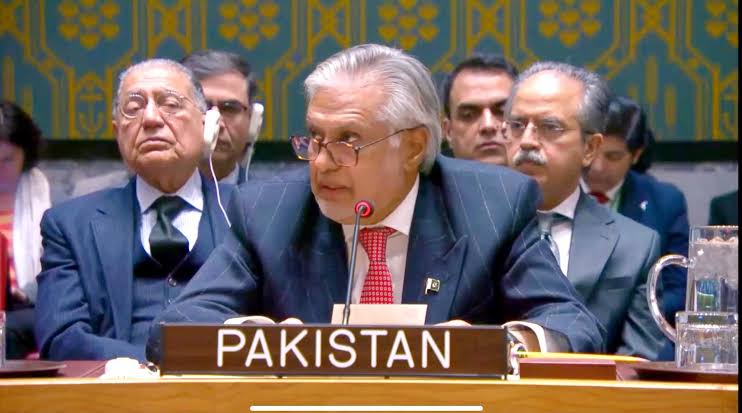
Pakistan has blamed Israel for escalating tensions in the Middle East
Pakistan has blamed Israel for escalating tensions in the Middle East, saying recent strikes on Iran undermined efforts to facilitate ceasefire talks between the United States and Iran. Deputy Prime Minister and Foreign Minister Ishaq Dar told the Senate that Israel launched an attack on Tehran at a time when both sides were preparing for engagement. He added that the subsequent strike on Jubail in Saudi Arabia further worsened the situation, making it more dangerous and sensitive. He said the conflict intensified after joint US-Israeli attacks on Iran on February 28, leading to one of the region’s most serious crises. The situation has also caused a sharp rise in global fuel and energy prices, mainly due to Iran’s effective blocking of the Strait of Hormuz. Addressing the Senate, Dar thanked Opposition Leader Senator Raja Nasir Abbas for acknowledging the government’s efforts, adding that Pakistan has remained actively engaged since the start of the crisis. He said that at the time of the first attack on Iran, he was in Madina attending an OIC meeting and immediately directed the Foreign Office to issue a strong condemnation. He also contacted the Iranian foreign minister, conveyed Pakistan’s support and sympathy, and assured efforts to mobilise regional countries for de-escalation. Dar said Pakistan has maintained continuous contact with key countries, including China, Japan, the United Kingdom, Canada, and several European states, to promote restraint and prevent further escalation. He emphasised that Pakistan has acted as a facilitator and mediator, carefully handling its role to avoid undermining sensitive diplomatic efforts. He added that Prime Minister Shehbaz Sharif, Army Chief Syed Asim Munir, and the Foreign Office have remained fully engaged in the process. Dar also informed the Senate that Saudi Arabia hosted a meeting of 12 countries in Riyadh on March 19, where Pakistan helped shape a balanced joint statement that included condemnation of Israel. He said a four-country group comprising Saudi Arabia, Egypt, Türkiye, and Pakistan has been working for peace, with a follow-up meeting later held in Islamabad after initially being planned in Istanbul. Foreign ministers of the three countries visited Pakistan on March 29 for bilateral and quadrilateral discussions to advance peace efforts. He added that Pakistan also engaged China at a high level, and during his visit on March 31, both sides discussed a five-point peace initiative, which was later made public. Dar further said that the United Nations Secretary-General had called him to appreciate Pakistan’s role and offered support for its diplomatic efforts. He noted that Pakistan continued its efforts until the last moment to create space for meaningful engagement, but recent developments have once again complicated the situation. He warned that a prolonged conflict could have serious consequences for the region and beyond, including economic impacts on Pakistan due to rising oil prices. The deputy prime minister expressed hope that continued diplomatic efforts would ultimately restore peace and lead to a dignified resolution of the conflict.
4/8/2026, 12:00:00 AM
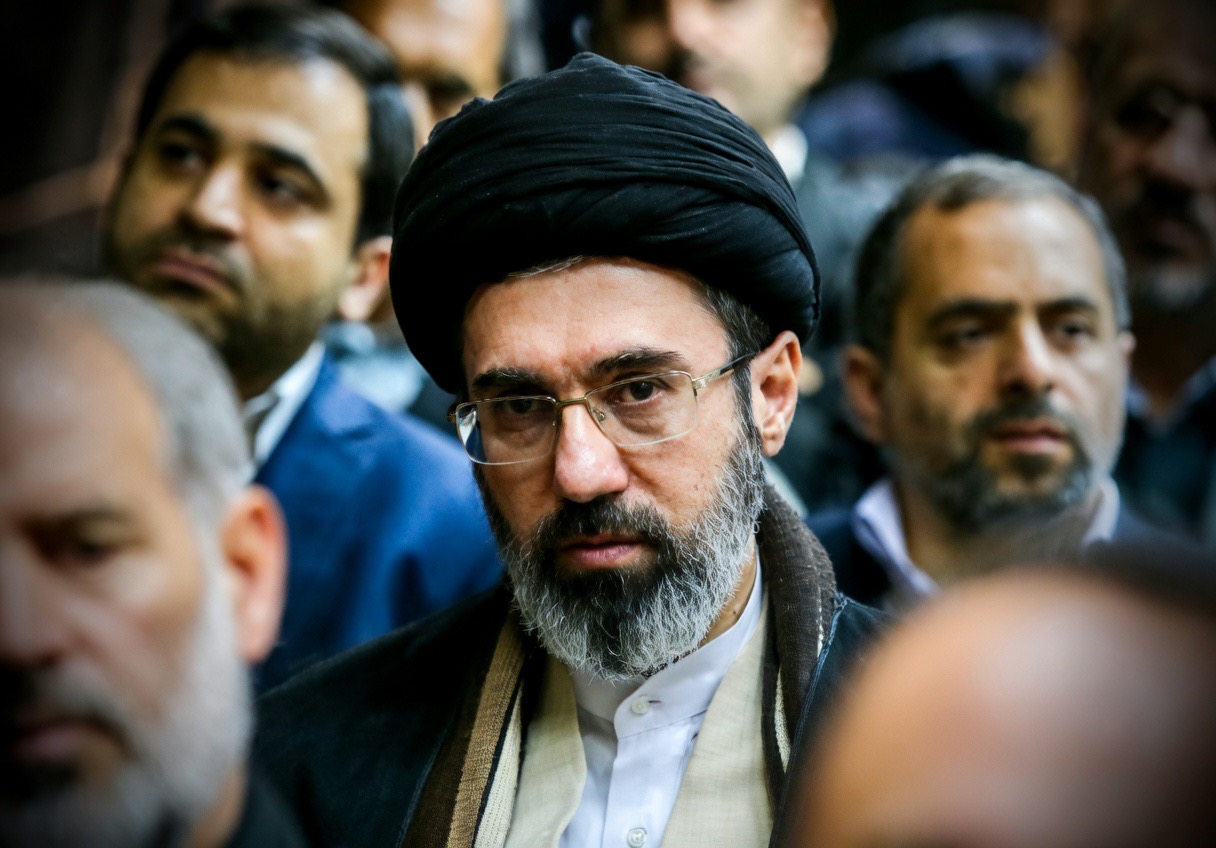
Iran rejected the 45-day temporary deal and sent back a list of its own
Iran rejected the 45-day temporary deal and sent back a list of its own Tehran: Iran has outlined an extensive set of conditions in response to a reported 45-day proposal from the United States, calling for a permanent end to ongoing conflicts not only within Iran but also across Lebanon and Gaza, according to state affiliated media reports. Citing Islamic Republic News Agency (IRNA), the proposal includes demands for binding guarantees to prevent any future resumption of hostilities. Iran has also called for international recognition of its control over the strategically vital Strait of Hormuz, including the authority to impose tolls on vessels transiting the waterway. Among the key conditions, Tehran is seeking the full removal of all economic sanctions, alongside formal acknowledgment of its right to enrich uranium under the Treaty on the Non-Proliferation of Nuclear Weapons (NPT). Additionally, Iran has demanded reparations for economic losses incurred during the conflict. The reported response highlights a significant gap between the two sides, with Iran framing its terms as a comprehensive peace settlement, while U.S officials had initially proposed a shorter term framework. There has been no immediate official reaction from Washington regarding the latest developments.
4/7/2026, 11:00:00 PM
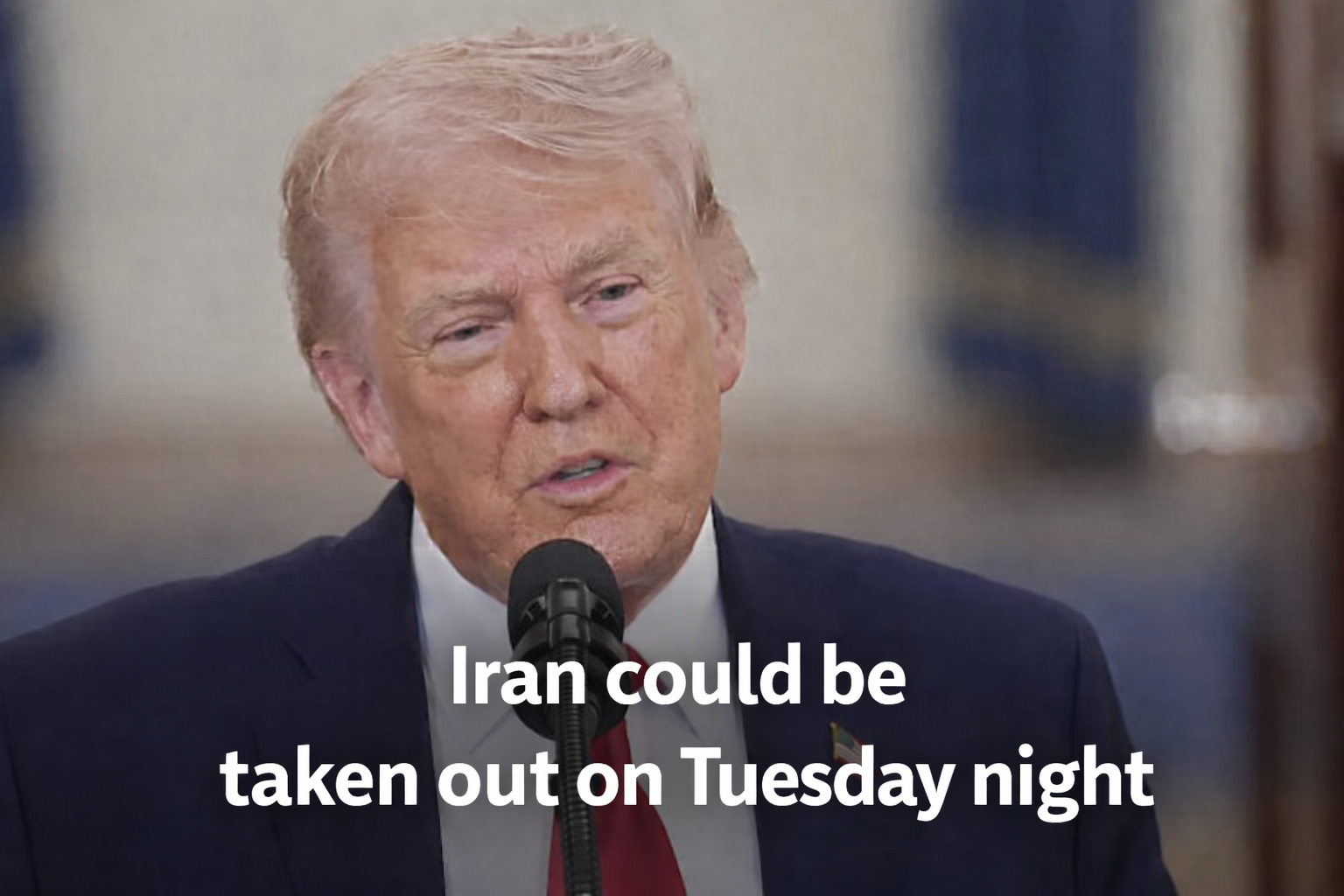
Trump Warns Iran ‘Can Be Taken Out’ as Tuesday Deadline Nears Amid Ongoing Talks
Trump Warns Iran ‘Can Be Taken Out’ as Tuesday Deadline Nears Amid Ongoing Talks U.S. President Donald Trump has sharply escalated tensions with Iran by warning that the country “can be taken out in one night,” suggesting potential military action as early as Tuesday if no agreement is reached. According to international media reports, the United States is also actively involved in ongoing indirect talks with Tehran, even as both sides remain far apart on key demands. While Washington is pushing for immediate compliance and de-escalation, Iran has reportedly rejected ceasefire proposals and is seeking broader concessions, including sanctions relief. The situation now stands at a critical point, with diplomacy continuing behind the scenes but the threat of a major military strike looming, raising global concerns over a wider conflict and its impact on regional stability and oil markets.
4/6/2026, 11:00:00 PM
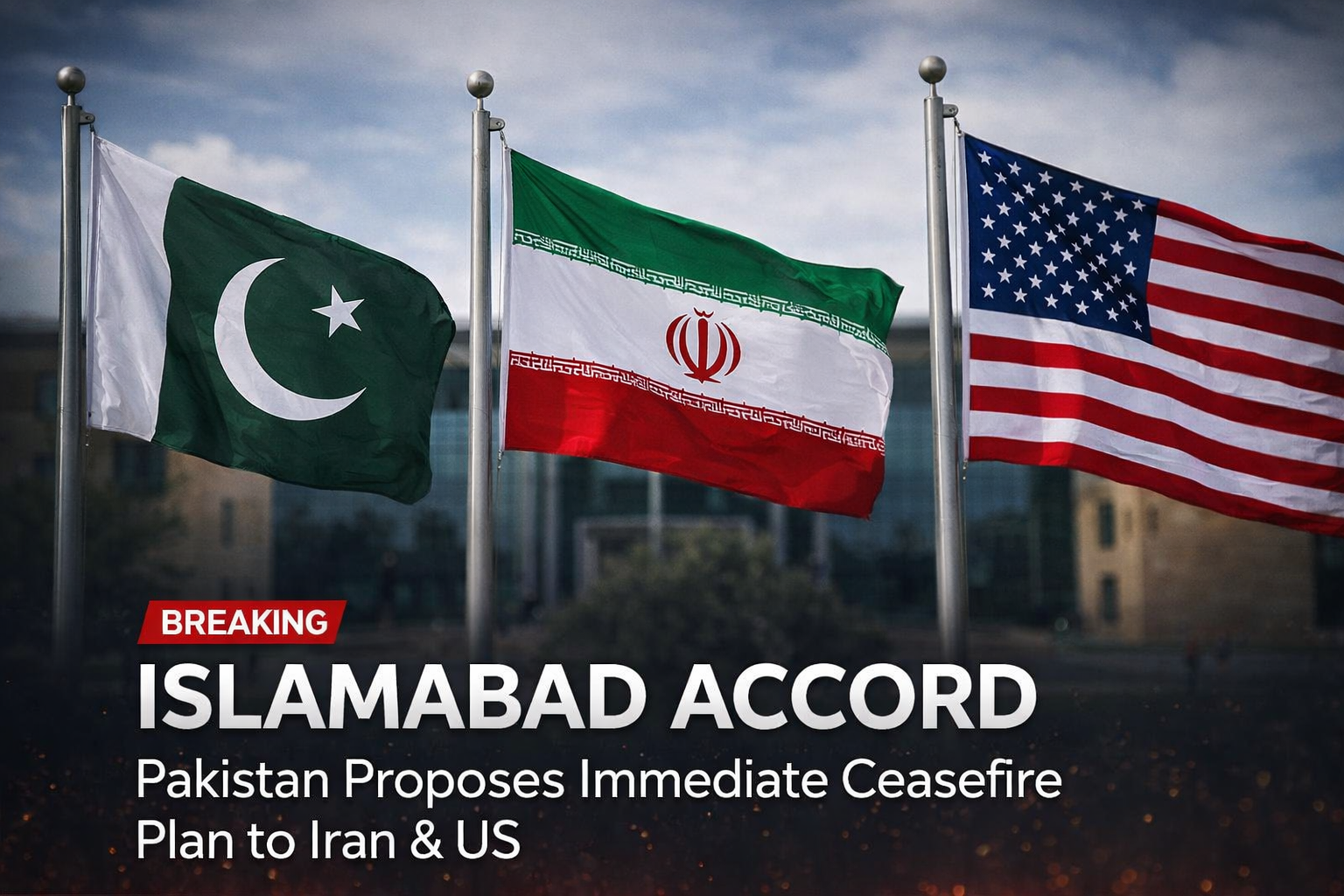
“Islamabad Accord: Pakistan Proposes Immediate Ceasefire Plan to Iran and US”
“Islamabad Accord: Pakistan Proposes Immediate Ceasefire Plan to Iran and US” Pakistan has shared a new plan called the “Islamabad Accord” with Iran and the US to stop fighting immediately and work toward a larger peace deal. The proposal calls for an instant ceasefire, reopening the Strait of Hormuz, and starting negotiations over the next 2–3 weeks on issues like sanctions relief, frozen Iranian assets, and Iran’s nuclear program. Pakistan’s military and diplomatic officials, including the army chief, have been in contact with top US and Iranian leaders to push the plan forward. So far, neither side has formally agreed, with Iran asking for full security guarantees and the US reviewing the proposal. If accepted, the accord could reduce tensions in the region and help stabilize global oil markets.
4/6/2026, 10:30:00 PM
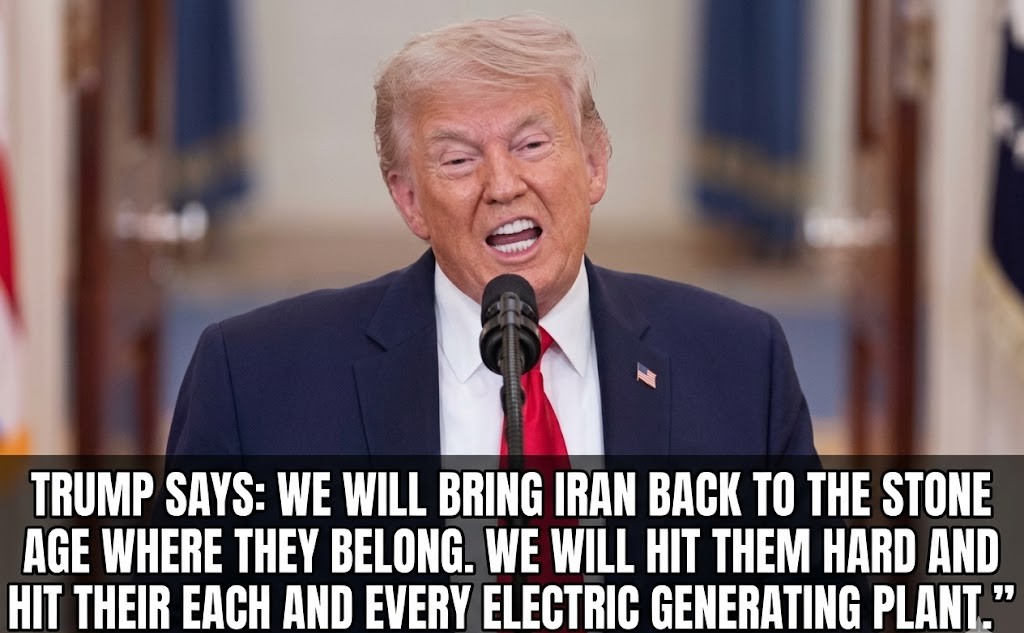
Trump Threatens to Strike Iran “Back to the Stone Ages” if No Deal Is Reached
Trump Threatens to Strike Iran “Back to the Stone Ages” if No Deal Is Reached In a prime‑time address to the nation on April 1, 2026, U.S. President Don delivered a stark warning to Iran, saying the United States would significantly scale over the next two to three weeks if Tehran failed to agree to a deal on U.S. terms. Trump said the United States was “on track to complete all of America’s military objectives shortly” but that a failure to reach an acceptable agreement would prompt harsher strikes. “We’re going to hit them extremely hard over the next two to three weeks … and send them back to the Stone Ages, where they belong,” he said. Threats Against Iranian Infrastructure A core part of Trump’s message was a threat to target Iran’s critical infrastructureparticularly him. In his remarks, he warned that if no deal were struck during this period, the U.S. would focus on these facilities: Trump explicitly mentioned targeting “each and every one of their electric‑generating plants very hard and probably simultaneously,” if Tehran did not capitulate. He also noted that oil infrastructure , which the U.S. has so far avoided striking, remains on the list of possible future targets, warning that hitting oil would leave Iran little chance to recover. Trump framed this escalation as necessary to prevent Iran from becoming a long‑term threat and reiterated his claim that regime change was not the original goal but that leadership changes had already occurred due to battlefield losses. War Context and International Reaction The war between the U.S., Israel, and Iran — which began on February 28 with a coordinated offensive — has already included strikes on military targets and significant Iranian retaliation, including missile launches toward Israel. Trump stressed that negotiations were continuing even as he issued his ultimatum. However, Iranian officials have rejected many U.S. terms, and the conflict shows little sign of a near‑term diplomatic resolution. Global and Legal Concerns Trump’s threat to weaponize attacks on civilian infrastructure has drawn widespread international concern: Legal scholars and human rights organisations have warned that targeting power grids and other civilian systems could violate international humanitarian law a Several governments and international figures have criticised the “Stone Age” rhetoric as dangerously escalatory and harmful to prospects for peace. Economic and Regional Impact Financial markets reacted sharply to Trump’s speech. Oil prices surged, reflecting fears of prolonged disruption in the Persian Gulf and the Strait of Hormuz, a vital global shipping lane for petroleum.
4/3/2026, 11:00:00 PM
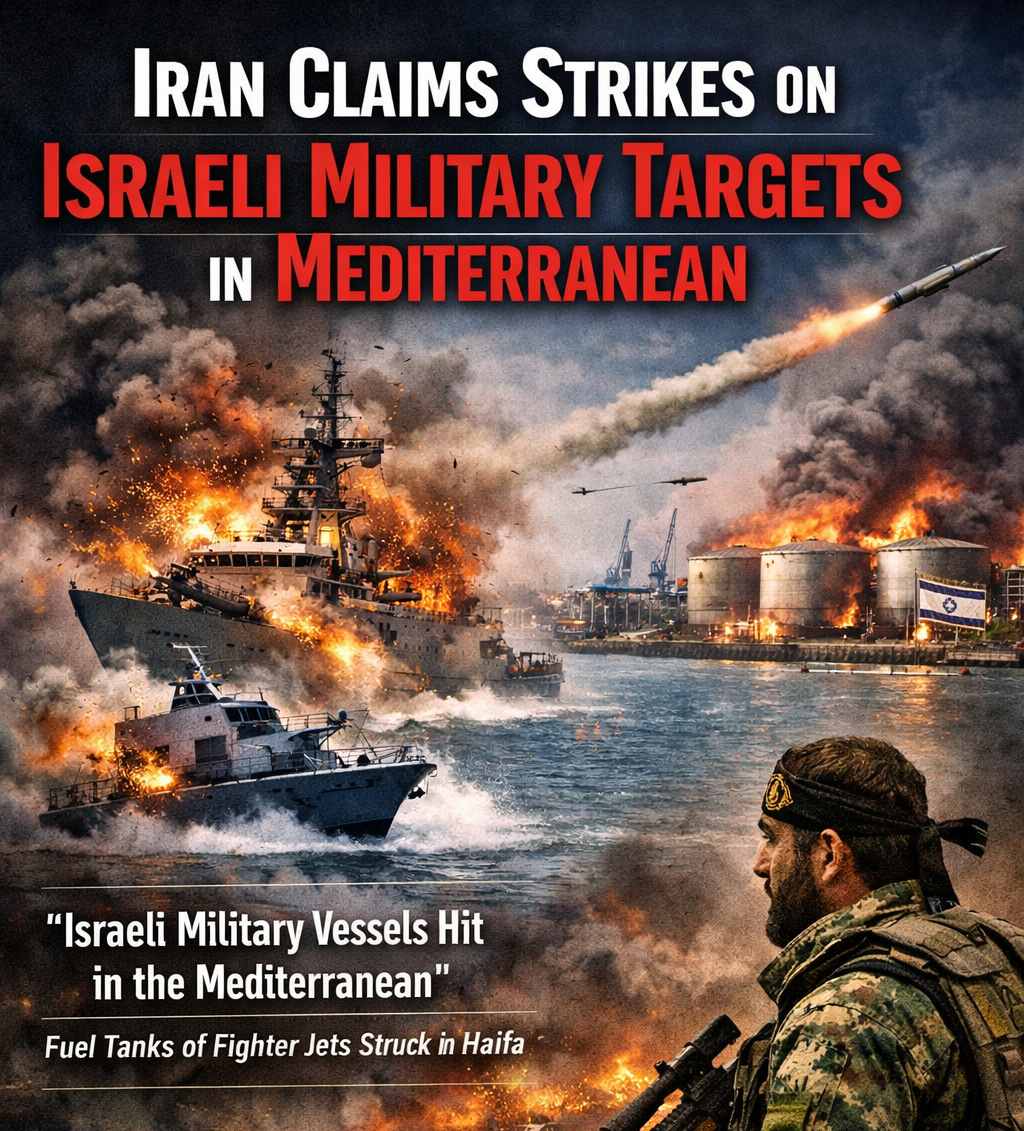
Iran Claims Strikes on Israeli Naval and Air Targets in Mediterranean
Iran Claims Strikes on Israeli Military Targets in Mediterranean Iran’s Islamic Revolutionary Guard Corps (IRGC) says it has targeted Israeli military assets in the eastern Mediterranean, according to reports citing Iranian media. In a statement, the IRGC’s Khatam al-Anbiya Central Headquarters claimed that “various types of Israeli military vessels” were hit, along with the “fuel tanks of Israeli fighter jets” at the port of Haifa. IRGC spokesperson Lieutenant Colonel Ebrahim Zolfaghari said Iran remains committed to responding forcefully. “We are determined to powerfully target the source of all aggression and evil, with the grace of God,” he stated.
3/27/2026, 2:00:00 AM
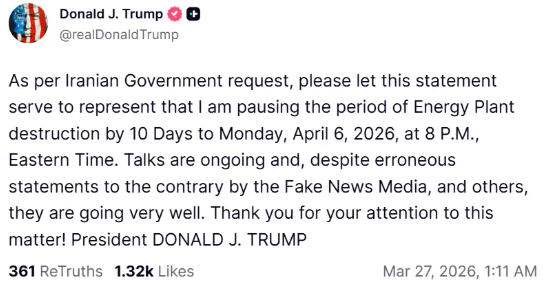
Trump Announces 10-Day Pause on Iran Strikes Amid Ongoing Negotiations
US Pauses Strikes on Iranian Energy Facilities for 10 Days, Says Trump US President Donald Trump has announced that the United States will pause strikes on Iranian energy plants for 10 days, until Monday, April 6, following a request from the Iranian government. In a post on Truth Social, Trump stated that discussions between the two sides are ongoing and progressing positively. He also dismissed contrary reports, saying that claims suggesting otherwise by the media are incorrect and that the talks are “going very well.”
3/27/2026, 1:00:00 AM
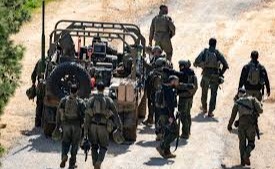
Israel’s Army Under Pressure as Troop Shortage Sparks Concern
Israel Opposition Warns of ‘Security Disaster’ as Army Faces Troop Shortage Israel’s opposition leader Yair Lapid has warned that the country is heading toward a “security disaster,” accusing the government of overextending the military while failing to provide enough combat soldiers. In a televised statement, Lapid said the Israeli army is under extreme pressure. “The IDF is stretched to the limit and beyond. The government is leaving the army wounded out on the battlefield,” he stated. His remarks come shortly after reports that Israel’s military chief, Lieutenant General Eyal Zamir, issued a similar warning to the security cabinet about the growing strain on forces. Lapid further criticized the government for its handling of the situation, saying it is pushing the military into a multi-front conflict without proper planning or resources. “The government is sending the army into a multi-front war without a strategy, without the necessary means, and with far too few soldiers,” he added. Meanwhile, the Israeli military has also acknowledged the need for more troops, particularly on the Lebanese front. Fighting continues in southern Lebanon against Hezbollah, where Israel is attempting to establish a buffer zone. Military spokesman Brigadier General Effie Defrin said that operations in the region require additional personnel. “On the Lebanese front, the forward defensive zone that we are creating requires additional IDF forces,” he said during a briefing. He also noted that the military is currently active on several fronts at the same time, including Gaza, the West Bank, and Syria, increasing the demand for combat troops. Officials say the ongoing operations across multiple regions have placed heavy pressure on the army, highlighting the urgent need for reinforcements.
3/27/2026, 12:00:00 AM
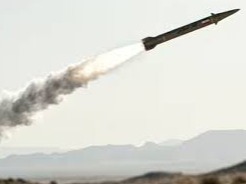
At Least 12 Injured in Central Israel After Missile Strike from Iran
At least 12 injured in central Israel after missile launch, say emergency services Emergency responders in Israel reported that at least 12 people were wounded in the country’s central region following a missile launch from Iran, according to AFP. The Magen David Adom (MDA) said its teams treated nine injured individuals in the city of Bnei Brak, located near Tel Aviv, before transferring them to nearby hospitals. Among the injured was a 23-year-old man in moderate condition who suffered shrapnel wounds to his abdomen and head. The remaining eight victims were reported to have minor injuries, including six children. MDA also confirmed that three additional people were hurt in the nearby area of Givat Shmuel. Visuals from the scene showed significant structural damage in Bnei Brak. A balcony had collapsed onto a parked car, while images released by rescue teams indicated that part of a residential building had caved in, with an upper-floor apartment collapsing into the level below. Authorities continue to assess the situation as emergency teams remain active in the affected areas.
3/25/2026, 2:00:00 AM