Pakistan has blamed Israel for escalating tensions in the Middle East
Ishaq Dar says Israeli strikes undermined ceasefire efforts
By Fahad Masood • Apr 08, 2026
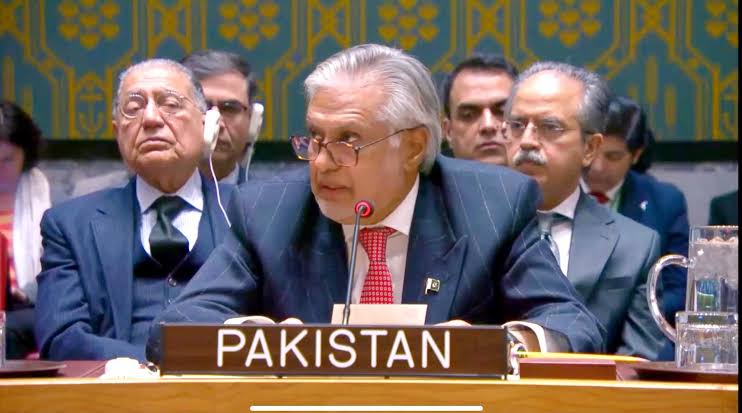
Recent strikes on Iran undermined efforts to facilitate ceasefire talks between the United States and Iran.
Pakistan has blamed Israel for escalating tensions in the Middle East, saying recent strikes on Iran undermined efforts to facilitate ceasefire talks between the United States and Iran.
Deputy Prime Minister and Foreign Minister Ishaq Dar told the Senate that Israel launched an attack on Tehran at a time when both sides were preparing for engagement. He added that the subsequent strike on Jubail in Saudi Arabia further worsened the situation, making it more dangerous and sensitive.
He said the conflict intensified after joint US-Israeli attacks on Iran on February 28, leading to one of the region’s most serious crises. The situation has also caused a sharp rise in global fuel and energy prices, mainly due to Iran’s effective blocking of the Strait of Hormuz.
Addressing the Senate, Dar thanked Opposition Leader Senator Raja Nasir Abbas for acknowledging the government’s efforts, adding that Pakistan has remained actively engaged since the start of the crisis.
He said that at the time of the first attack on Iran, he was in Madina attending an OIC meeting and immediately directed the Foreign Office to issue a strong condemnation. He also contacted the Iranian foreign minister, conveyed Pakistan’s support and sympathy, and assured efforts to mobilise regional countries for de-escalation.
Dar said Pakistan has maintained continuous contact with key countries, including China, Japan, the United Kingdom, Canada, and several European states, to promote restraint and prevent further escalation.
He emphasised that Pakistan has acted as a facilitator and mediator, carefully handling its role to avoid undermining sensitive diplomatic efforts. He added that Prime Minister Shehbaz Sharif, Army Chief Syed Asim Munir, and the Foreign Office have remained fully engaged in the process.
Dar also informed the Senate that Saudi Arabia hosted a meeting of 12 countries in Riyadh on March 19, where Pakistan helped shape a balanced joint statement that included condemnation of Israel.
He said a four-country group comprising Saudi Arabia, Egypt, Türkiye, and Pakistan has been working for peace, with a follow-up meeting later held in Islamabad after initially being planned in Istanbul. Foreign ministers of the three countries visited Pakistan on March 29 for bilateral and quadrilateral discussions to advance peace efforts.
He added that Pakistan also engaged China at a high level, and during his visit on March 31, both sides discussed a five-point peace initiative, which was later made public.
Dar further said that the United Nations Secretary-General had called him to appreciate Pakistan’s role and offered support for its diplomatic efforts.
He noted that Pakistan continued its efforts until the last moment to create space for meaningful engagement, but recent developments have once again complicated the situation.
He warned that a prolonged conflict could have serious consequences for the region and beyond, including economic impacts on Pakistan due to rising oil prices.
The deputy prime minister expressed hope that continued diplomatic efforts would ultimately restore peace and lead to a dignified resolution of the conflict.