world
Featured News
FIFA World Cup 2026 Set for USA, Mexico & Canada as Official Match Ball Produced in Pakistan’s Sialkot
Pakistan Raises Kashmir Issue in EU Strategic Dialogue
Russia and Afghanistan Sign Defense Cooperation Deal Amid Regional Diplomatic Activity
Heated Phone Call Reported Between Trump and Netanyahu Amid Lebanon Tensions
Trump says China has agreed to buy US oil, Fox News reports
Trump Arrives in Beijing for Crucial Summit With Xi Amid Global Tensions
ہنٹا وائرس: ایک نیا خطرہ، ایک نئے پینڈیمک کے آغاز کا خدشہ
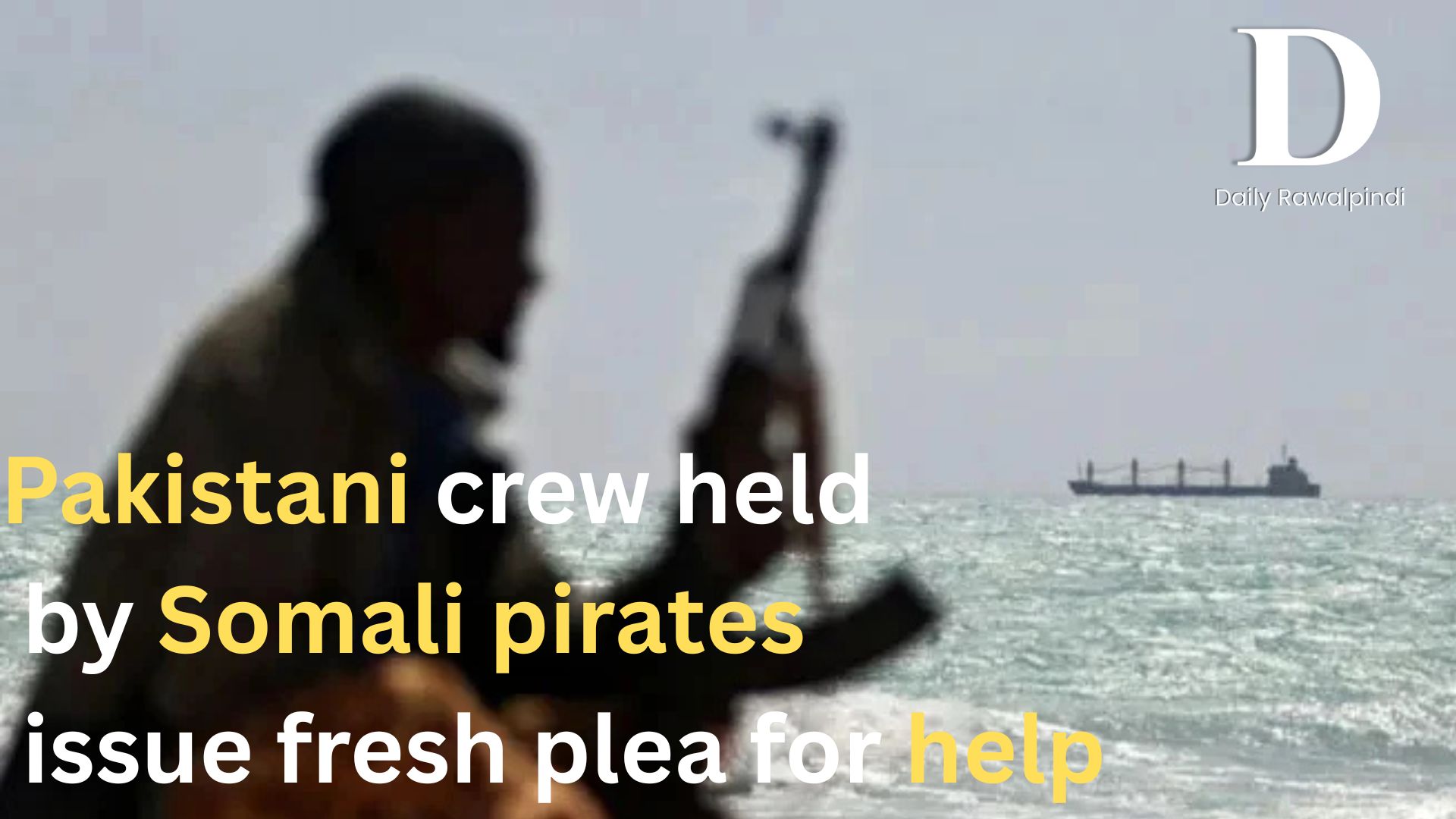
Somali Pirates Hold Pakistani Crew for 57 Days as Conditions Worsen on Hijacked Vessel MT Honour 25
6/17/2026, 1:45:00 PM
A newly surfaced video has revealed deteriorating conditions aboard the hijacked vessel MT Honour 25, where Pakistani crew members held by Somali pirates have made a desperate appeal for government intervention to secure their release. The ship, carrying 17 crew members including 10 Pakistanis, was seized by pirates near Somalia’s semi-autonomous Puntland region on April 21. Since then, families of the hostages have expressed increasing concern, saying the situation onboard has worsened significantly over time. In the video, second officer Syed Kashif Umar confirmed that the Pakistani crew has now been held for 57 days. He said the captives are facing severe shortages of food, several crew members have fallen ill, and negotiations with the vessel’s owners have stalled. He urged authorities to pressure the shipping company to engage directly with the pirates to help secure their release. The ship’s Indonesian captain also appeared in the video, appealing to his government for urgent assistance. Pakistan’s Foreign Office stated last week that efforts are ongoing to secure the safe return of its citizens and that the government remains fully committed to resolving the crisis. Diplomatic sources said the vessel is still anchored off the Somali coast while negotiations continue. They added that Somali authorities are reportedly in contact with the pirates through the vessel’s owners in an attempt to facilitate a resolution. According to reports, the pirates initially demanded a ransom of $10 million, later reducing it to $4 million, but talks have yet to make meaningful progress. Meanwhile, families of the Pakistani crew have urged the government to intensify diplomatic efforts, expressing fear for the safety of their loved ones. Piracy off Somalia was once widespread in the 2000s, peaking in 2011 with hundreds of recorded attacks. However, it declined in later years following international naval operations and stronger security measures adopted by commercial shipping companies. Recent reports from the European Union Naval Force, Operation Atalanta, suggest a renewed rise in attacks in the region. Its Maritime Security Centre Indian Ocean noted multiple incidents in late April. Although regional maritime activity has been affected by ongoing geopolitical tensions since late February, there is currently no evidence linking the hijacking of MT Honour 25 to the wider conflict.

Grok AI Reportedly Used in U.S. Military Strikes on Iran, Court Filing Reveals
U.S. Government Reveals Use of Elon Musk’s Grok AI in Military Operations Against Iran A legal filing reviewed by AFP has revealed that Elon Musk’s artificial intelligence system, Grok, has been used in U.S. military operations targeting Iran. The June 15 court brief defends the use of gas turbines powering a large xAI data center owned by Musk’s company. The turbines are currently under environmental scrutiny in a lawsuit. The U.S. Department of Justice argued that shutting down the facility could harm “American national, economic, and energy security” by disrupting AI systems that support military operations. According to the filing, Pentagon AI chief Cameron Stanley testified that Grok is already integrated into Project Maven, the U.S. military’s AI-assisted targeting program, which was previously powered by Anthropic’s Claude model. Stanley’s statement claims that the system, referred to as Maven Smart Systems, allowed U.S. forces to deploy more than 2,000 munitions across 2,000 targets within 96 hours during an operation described as “Epic Fury.” He also highlighted improved efficiency achieved through what he called the “Grok Gov Model.” Meanwhile, the NAACP has filed a lawsuit against xAI, accusing the company of operating multiple gas turbines without proper environmental permits, allegedly impacting predominantly Black neighborhoods. xAI has responded by stating that the turbines are temporary and mobile, and therefore not subject to the same regulations. The report also notes a shift in Pentagon partnerships. In February, the U.S. government ended contracts with Anthropic after the company declined to permit its AI systems for fully automated strikes or large-scale surveillance of Americans. Following this, the Pentagon reportedly turned to other AI providers, including Google, OpenAI, and xAI. Earlier concerns have also been raised within the tech sector, with hundreds of employees at Google reportedly urging the company not to involve its AI systems in classified military operations. The U.S. military’s broader adoption of AI continues to evolve, with reports indicating that Claude was still being used in operations in Iran as recently as March. Musk’s xAI has also seen major corporate restructuring, as it was merged with SpaceX earlier this year, which recently completed a historic IPO.
6/17/2026, 1:00:00 PM
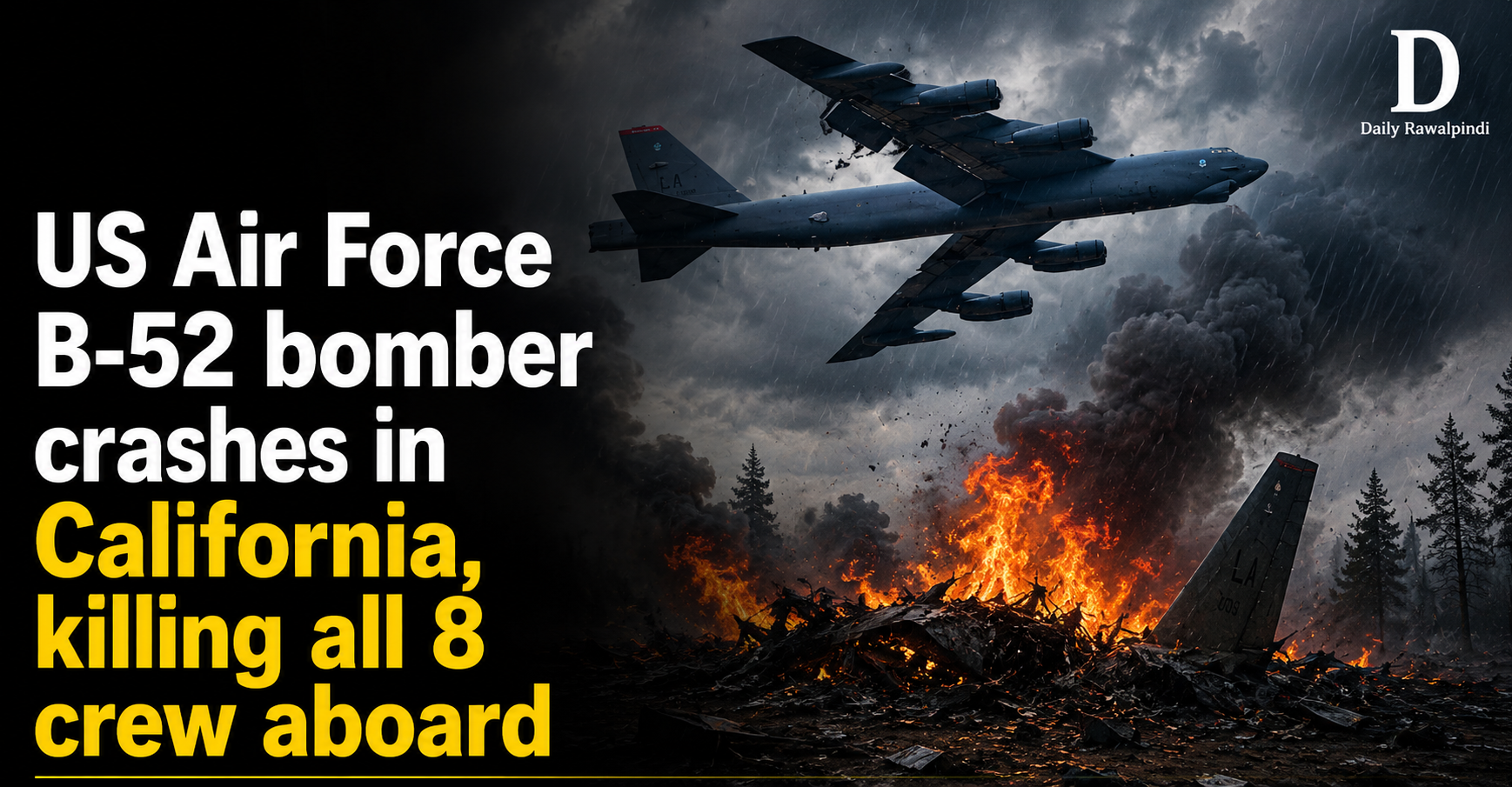
US B-52 Stratofortress Bomber Crashes at Edwards Air Force Base, Eight Crew Killed
CALIFORNIA: A United States Air Force B-52 Stratofortress bomber crashed during takeoff on Monday at Edwards Air Force Base in the Mojave Desert, killing all eight personnel on board, officials confirmed. According to Air Force representatives, the long-range, eight-engine aircraft was on a routine test mission when it failed shortly after lifting off from the runway and crashed within the base perimeter. The impact triggered a massive fire, sending thick black smoke high into the air that was visible from miles away. Colonel James Hayes said the aircraft was engaged in a scheduled flight linked to a radar modernisation programme. He confirmed that the crash involved a “mixed crew” consisting of US Air Force personnel, civilian government employees, and contractors. Defence contractor Boeing stated that two of its employees were among those killed in the incident. Officials described the crash site as a large scorched area on the desert floor, with aerial footage showing a heavily burned patch roughly the size of a football field. Emergency crews were seen securing the perimeter as investigations began. Authorities have not yet released the identities of the victims, pending notification of their families. Colonel Hayes further stated that the accident was immediately assessed as “unsurvivable.” He added that operations at Edwards Air Force Base were temporarily suspended due to damage to the runway, although no wider operational disruptions outside the facility were expected. Edwards Air Force Base, located around 100 miles north of Los Angeles, is one of the most significant US military aviation testing sites. Spanning approximately 481 square miles, the base has played a historic role in experimental flight testing, including landmark achievements such as Chuck Yeager’s supersonic flight in the Bell X-1 aircraft in 1947 and early NASA Space Shuttle landings. The crashed aircraft, the B-52 Stratofortress, is one of the oldest and most enduring strategic bombers in US service. Developed during the Cold War era, it remains a core component of the US long-range bombing fleet. Capable of carrying up to 70,000 pounds of weapons—including conventional bombs, precision-guided munitions, and nuclear payloads—the aircraft can operate at altitudes of up to 50,000 feet with an unrefuelled combat range exceeding 8,000 miles. The B-52 fleet currently in service consists primarily of upgraded H-model variants, many of which are based at military installations in North Dakota and Louisiana. The aircraft involved in Monday’s crash was assigned to the 412th Test Wing, which oversees testing operations at Edwards. Authorities confirmed that a full investigation has been launched to determine the cause of the crash, which remains unknown at this stage. Officials are examining flight data, maintenance records, and operational conditions as part of the inquiry. Monday’s incident marks one of the deadliest losses involving a B-52 in recent years. The last recorded crash of the aircraft type occurred in 2016 near Guam, where all seven crew members survived.
6/16/2026, 12:45:00 PM

FIFA World Cup 2026 Set for USA, Mexico & Canada as Official Match Ball Produced in Pakistan’s Sialkot
The FIFA World Cup 2026 is scheduled to be held across the United States, Mexico, and Canada, marking the first time in history that the tournament will be hosted jointly by three nations. The competition will kick off on June 11, 2026, and run until July 19, 2026, featuring an expanded format with 48 teams competing for football’s most prestigious trophy. One of the key highlights of the tournament is the official match ball, named “Trionda,” which has been manufactured in Sialkot, Pakistan. The ball is produced by Forward Sports, a globally recognized sports manufacturing company that has long-standing partnerships with Adidas and has previously supplied match balls for several FIFA tournaments, including the 2014, 2018, and 2022 World Cups. According to international sports reports, the Trionda ball features advanced design technology, including a thermally bonded four-panel structure—one of the lowest panel counts in World Cup history—designed to improve flight stability and accuracy. It also incorporates a connected ball system with an internal sensor that tracks movement and touch data in real time, supporting referees through VAR and semi-automated offside technology. Sialkot, Pakistan, is widely regarded as the global hub for football manufacturing, producing a significant share of the world’s hand-stitched footballs. Industry records and sports manufacturing data show that the city has been responsible for producing official and replica FIFA match balls for over five decades, with Adidas continuously sourcing World Cup balls from the region since 1970. Forward Sports, the company behind the 2026 match ball, operates one of the largest football manufacturing facilities in the world. The firm has built a reputation for delivering high-quality sports equipment for major international events and remains one of Adidas’s key production partners. The FIFA World Cup 2026 will also introduce several major changes to the tournament structure, expanding the number of participating teams to 48 and increasing the total number of matches. The opening match will be held at Estadio Azteca in Mexico City, while the final is scheduled to take place at MetLife Stadium in New Jersey, USA. Alongside the excitement surrounding the tournament, the production of the official match ball in Pakistan has once again highlighted Sialkot’s central role in global sports manufacturing. The city is estimated to produce millions of footballs annually and supplies equipment to major international brands including Adidas, Nike, and Puma. Industry experts note that Pakistan’s football manufacturing sector continues to remain a key part of the global supply chain, despite increasing competition from other countries. The production of the World Cup match ball further strengthens Sialkot’s reputation as the “football capital of the world.” With less than a year remaining before kickoff, anticipation is building worldwide as teams prepare for the expanded World Cup, while Pakistan’s Sialkot once again finds itself at the heart of football’s biggest stage.
6/6/2026, 12:30:00 AM
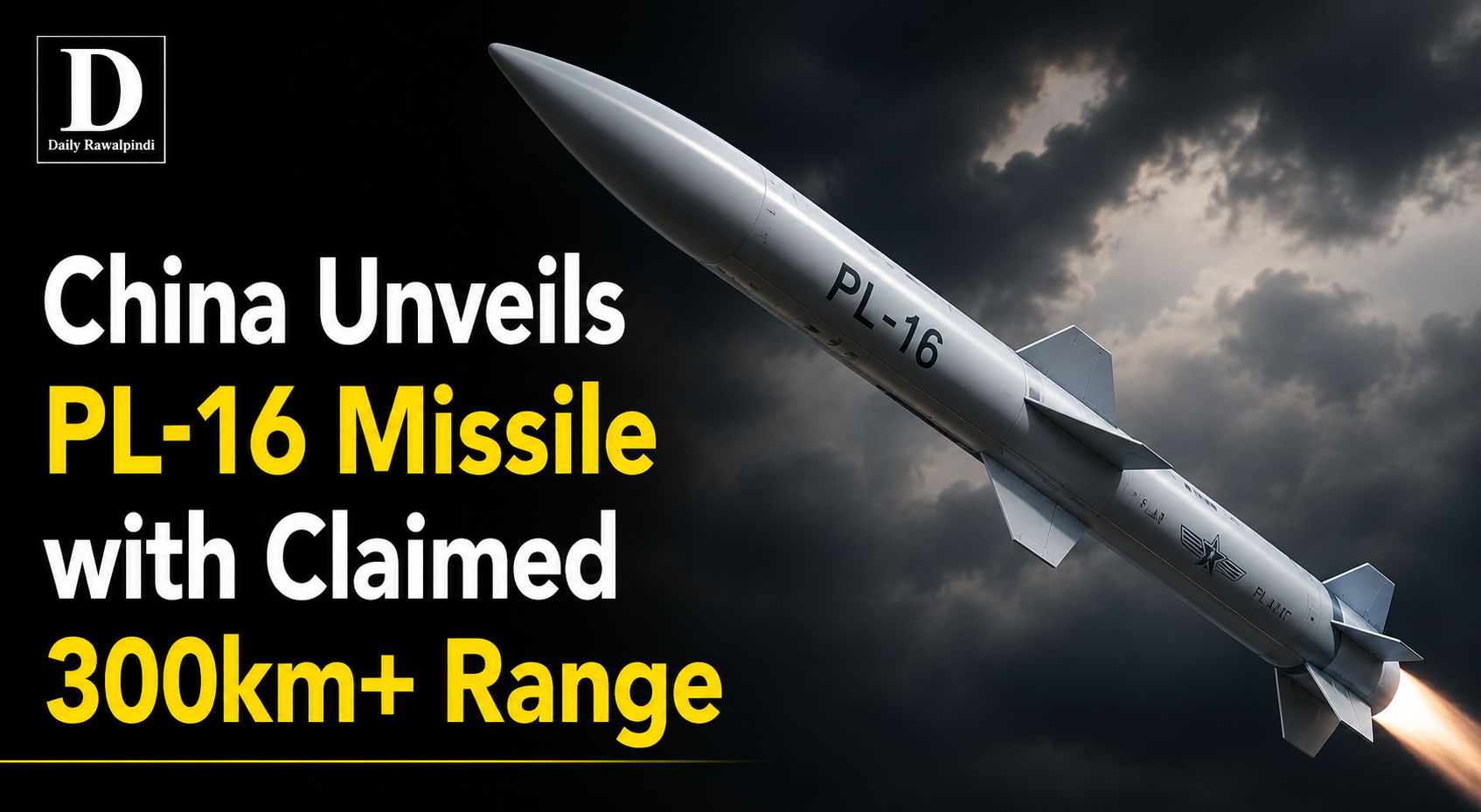
China Unveils PL-16 Missile with Claimed 300km+ Range
Next-Generation Air-to-Air Missile Could Further Strengthen China's Long-Range Air Combat Dominance China has reportedly unveiled details of its next-generation PL-16 air-to-air missile, claiming a maximum engagement range exceeding 300 kilometers. Defense analysts believe the missile represents a major leap in beyond-visual-range (BVR) warfare and could become one of the most capable air-to-air weapons in China's arsenal. According to reports emerging from Chinese defense research circles, the PL-16 is designed to engage enemy aircraft at extreme distances while maintaining high end-game energy through advanced propulsion technology. The missile is believed to feature a variable-thrust rocket motor, allowing it to conserve energy during flight and extend its effective combat range. Some technical assessments suggest that this propulsion system could enable the missile to strike targets more than 300 kilometers away under optimal launch conditions, significantly surpassing many existing BVR missiles in service worldwide. PL-15 Set the Foundation for China's BVR Capabilities The PL-16 follows the success of the PL-15 missile, which has become one of China's most advanced long-range air-to-air weapons. The PL-15 entered Chinese service several years ago and gained global attention in 2025 after reports emerged of its operational deployment by Pakistan. The missile features an Active Electronically Scanned Array (AESA) radar seeker, two-way datalink guidance, and a reported range of up to 200–300 kilometers for the domestic Chinese version. Pakistan operates the export version, known as the PL-15E, which has a reduced range of approximately 145 kilometers. The missile was integrated into both the JF-17 Block III and J-10CE fighter jets of the Pakistan Air Force, significantly enhancing their long-range engagement capabilities. Official imagery released by the Pakistan Air Force in 2025 confirmed PL-15E missiles mounted on JF-17 Block III aircraft, while J-10CE fighters were already known to operate the weapon. Potential Impact on Regional Air Power Military analysts believe the introduction of the PL-16 could further shift the balance of air combat by allowing Chinese fighter aircraft to engage hostile aircraft, airborne warning systems, and support platforms from unprecedented distances. The missile is expected to be integrated with advanced Chinese fighters, including the J-20 stealth fighter and future variants of the J-10 and J-16 families. For Pakistan, the development is being closely watched as Islamabad already operates Chinese-made J-10CE and JF-17 Block III fighters equipped with PL-15E missiles. Any future export version of the PL-16 could provide another major boost to Pakistan's air combat capabilities and further strengthen defense cooperation between Beijing and Islamabad. However, China has not officially announced any export plans for the new missile. A New Era of Long-Range Air Warfare With the claimed unveiling of the PL-16, China appears determined to maintain its rapid pace of missile modernization. If the reported 300km-plus range and advanced propulsion technologies are validated, the PL-16 could become one of the world's most formidable air-to-air missiles, setting a new benchmark for future aerial combat and challenging competing missile programs being developed by Western and regional powers.
6/3/2026, 11:30:00 PM
Pakistan Raises Kashmir Issue in EU Strategic Dialogue
ISLAMABAD: Pakistan raised the issue of Jammu and Kashmir during the 8th Pakistan–European Union Strategic Dialogue held in Islamabad, as both sides reviewed cooperation across political, economic, security, and regional matters. The dialogue was co-chaired by Pakistan’s Deputy Prime Minister and Foreign Minister Ishaq Dar and the EU High Representative for Foreign Affairs Kaja Kallas, and concluded with a joint communiqué covering a broad range of issues. According to the official statement, Pakistan briefed the EU on Jammu and Kashmir, while the EU discussed Russia’s war in Ukraine. Both sides reiterated their support for peaceful resolution of disputes through dialogue and adherence to the UN Charter. Both sides reviewed the full scope of EU–Pakistan relations under the EU–Pakistan Strategic Engagement Plan 2019 and agreed to further strengthen cooperation across all areas of mutual interest. The dialogue reaffirmed commitment to multilateralism, the UN Charter, and a rules-based international order. Both sides emphasized promoting peace, prosperity, and respect for human rights as core principles of global governance. The two sides welcomed growing momentum in bilateral relations, including increasing high-level exchanges and the successful holding of the first EU–Pakistan Business Forum in April 2026 in Islamabad, which also launched the EU–Pakistan Business Network to promote trade and investment. Economic cooperation remained a key focus, with both sides reiterating the importance of the GSP+ framework. The EU briefed Pakistan on updates to the new GSP+ regulation, while Pakistan expressed interest in continued engagement to meet required conditions. Human rights obligations under international law were also reaffirmed. Security cooperation was discussed, including counterterrorism collaboration and continued coordination under the Strategic Engagement Plan. Both sides also reviewed cooperation on migration, labour mobility, and the implementation of the EU–Pakistan Talent Partnership Roadmap, alongside efforts to combat migrant smuggling and trafficking. The dialogue also highlighted cooperation on multilateral issues, including support for effective global governance with the United Nations at its center, and coordination on initiatives such as UN80. On global and regional issues, both sides reaffirmed support for sovereignty, territorial integrity, and peaceful dispute resolution. Pakistan also briefed the EU on Jammu and Kashmir, while the EU shared its position on the Russia–Ukraine war. Both sides reiterated commitment to resolving conflicts through diplomacy under the UN Charter. The discussions further covered Afghanistan, where concerns were raised about terrorism, human rights, and the need to ensure Afghan territory is not used for cross-border attacks. The EU encouraged de-escalation and respect for international law. The situation in the Occupied Palestinian Territory and Lebanon was also reviewed, with both sides calling for humanitarian access, de-escalation, and long-term political solutions based on international law and relevant UN resolutions. Both sides agreed to continue high-level engagement and decided to hold the 9th Round of the Strategic Dialogue in Brussels at a mutually convenient time.
6/3/2026, 3:00:00 AM
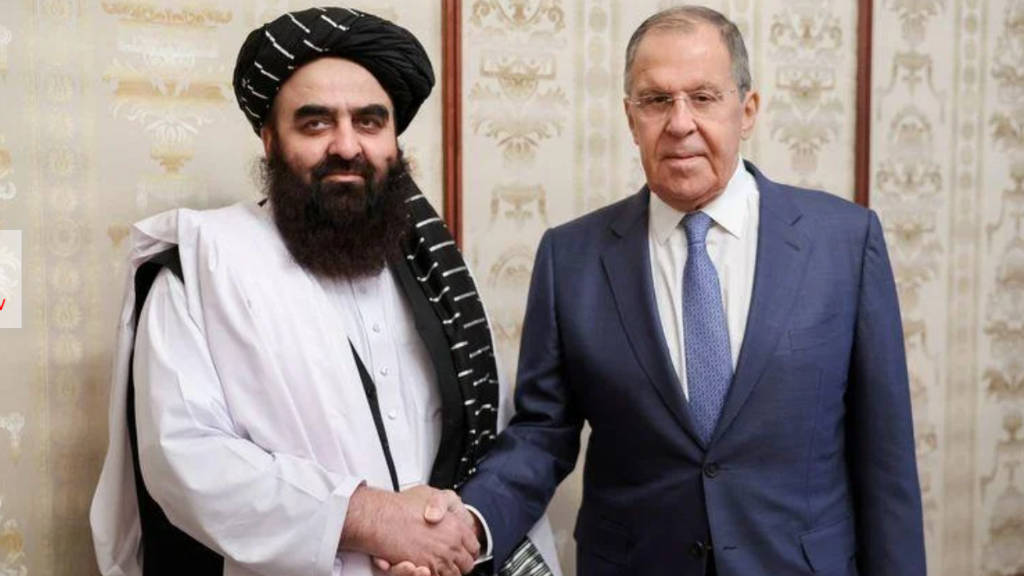
Russia and Afghanistan Sign Defense Cooperation Deal Amid Regional Diplomatic Activity
Afghanistan–Russia Defense Cooperation Deal and Regional Diplomatic Maneuvers Reported Amid Rising South Asian Tensions Recent reports indicate that Afghanistan under the Taliban administration has expanded its military cooperation with Russia through a new defense-related agreement signed in Moscow, signaling a notable shift in regional alignments. According to multiple international reports, including Russian and regional media, Russia and Afghanistan have signed a military-technical cooperation agreement covering areas such as defense coordination, training, and potential exchanges in military technology. The deal was reportedly finalized between Russian Security Council officials and Afghan defense representatives during a security forum in Moscow. While full details of the agreement have not been made public, analysts cited in international coverage suggest it may include cooperation in areas such as arms maintenance, limited technology transfer, and joint security discussions rather than a formal military alliance. Pakistan’s Regional Diplomatic Engagement with Iran In parallel developments, Pakistan has been actively engaged in diplomatic discussions with Iran, focusing on regional security, border stability, and broader geopolitical coordination. Recent reporting suggests that Islamabad and Tehran have held talks aimed at preventing escalation in regional conflicts and improving coordination on security matters along shared borders. However, there is no verified evidence or credible reporting that these discussions are linked to blocking or preventing Afghanistan’s defense cooperation with Russia. Experts say Pakistan’s diplomatic engagement with Iran is primarily driven by border security concerns, energy cooperation, and efforts to stabilize broader regional tensions rather than interference in third-party defense agreements. Regional Context: Rising Strategic Realignments The broader region is witnessing increased diplomatic activity involving Afghanistan, Pakistan, Iran, China, and Russia, as countries reassess security partnerships amid shifting geopolitical conditions. Afghanistan’s growing ties with Russia reflect Moscow’s expanding engagement in Central and South Asia, while Pakistan continues to pursue parallel diplomatic channels with regional neighbors to manage security risks and maintain strategic balance. Analysts note that while competing narratives circulate online, most claims linking these developments as coordinated efforts between Pakistan, Iran, and Afghanistan remain unverified and speculative. Outlook With multiple overlapping diplomatic initiatives underway, the region remains in a period of fluid alliances and cautious engagement. However, no official statements confirm any coordinated attempt by Pakistan or Iran to obstruct Afghanistan’s defense cooperation with Russia.
6/3/2026, 2:00:00 AM
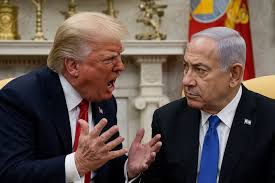
Heated Phone Call Reported Between Trump and Netanyahu Amid Lebanon Tensions
US President Donald Trump reportedly engaged in a heated phone call with Israeli Prime Minister Benjamin Netanyahu over Israel’s ongoing military escalation in Lebanon, according to sources cited by Axios. The reported exchange came at a time when regional tensions were already running high, with fears that the conflict could spill further beyond Lebanon’s borders. Iran has also warned that it could reconsider ongoing diplomatic negotiations with Washington if Israeli military operations continue to intensify. According to the report, Trump strongly criticised Netanyahu’s approach and urged restraint, cautioning that any potential strike on Beirut could significantly increase Israel’s diplomatic isolation and complicate its international position. Sources further claimed that the intervention contributed to a pause or reassessment of plans for a major Israeli operation targeting the Lebanese capital, though this has not been independently verified. Trump Said: "You're f**king crazy. You'd be in prison if it weren't for me. I'm saving your a**. Everybody hates you now. Everybody hates israel because of this." The broader context of the situation involves continued cross-border tensions between Israel and armed groups operating in Lebanon, particularly Hezbollah, which have fueled ongoing exchanges and raised concerns among international observers about the risk of wider regional escalation. Multiple international reports have highlighted increasing diplomatic pressure from the United States and other actors seeking to prevent further expansion of the conflict. U.S. officials have repeatedly emphasized behind-the-scenes efforts aimed at de-escalation and preventing the crisis from spreading further in the region, though details of these diplomatic engagements remain limited. Overall, the reported call reflects growing friction over strategy among key political figures as the situation in the region remains highly volatile and closely watched by global powers.
6/3/2026, 1:00:00 AM
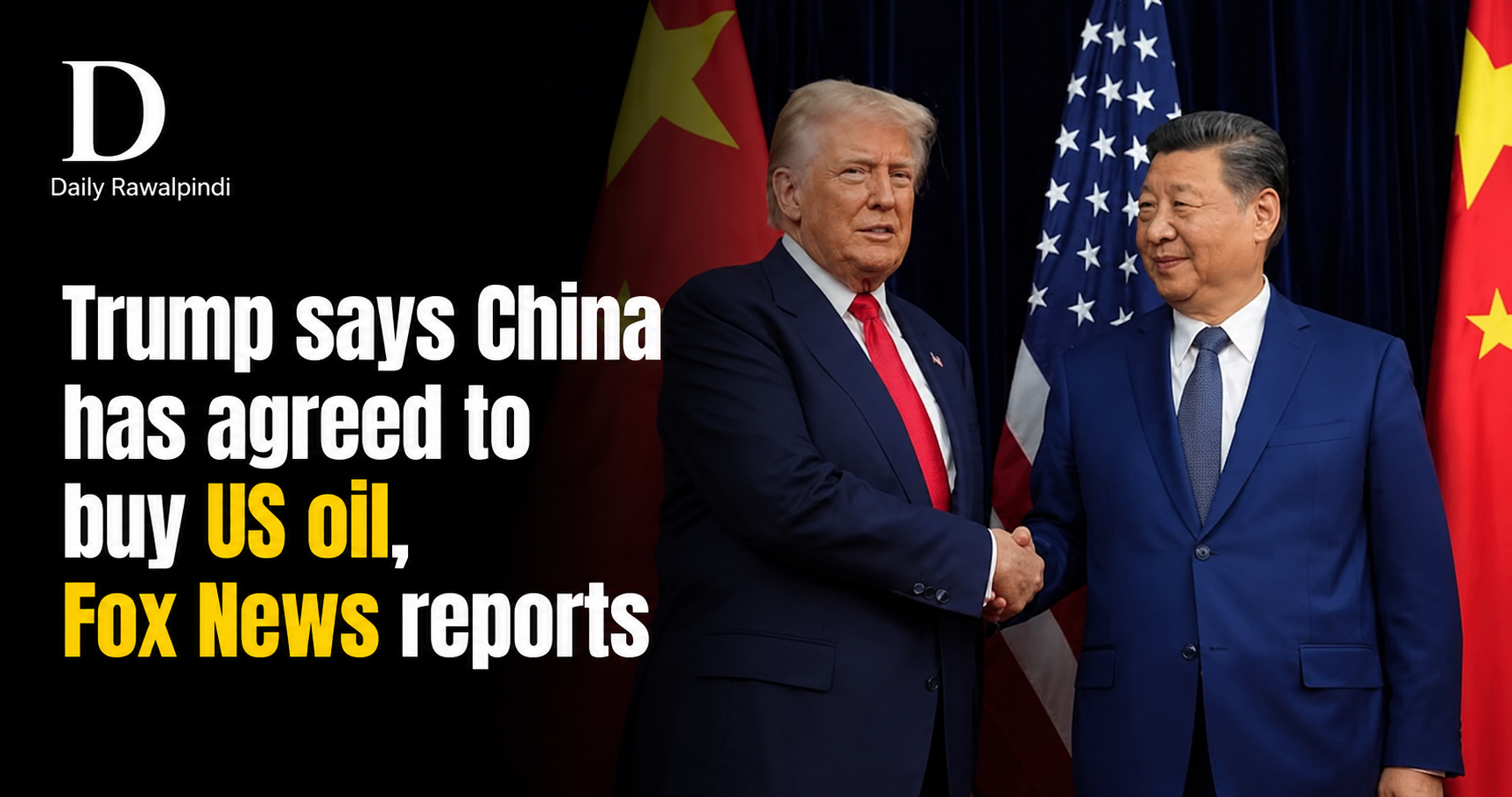
Trump says China has agreed to buy US oil, Fox News reports
Trump Claims Major Trade Wins After High-Level Meeting With Xi Jinping US President Donald Trump is currently in China for a high-stakes summit with Chinese President Xi Jinping, where both leaders discussed trade, energy cooperation, and regional security issues. Following bilateral talks in Beijing, Trump described the discussions as “fantastic” and claimed that both countries had made significant progress on new trade agreements. One of the key outcomes, according to Trump, was China’s agreement to increase purchases of American oil. Speaking in an interview with Fox News after meeting Xi, Trump said China plans to begin importing more energy from the United States, with shipments expected from Texas, Louisiana, and Alaska. He highlighted China’s growing demand for energy and stressed that the US has abundant oil and gas resources to meet those needs. Trump also stated that the two sides discussed tensions in the Middle East, particularly the Strait of Hormuz. According to him, Xi supports keeping the vital shipping route open and free from restrictions or tolls. Trump further claimed that China agreed to cooperate on negotiations involving Iran and avoid supplying military equipment to Tehran. The US president emphasized America’s energy production capabilities, saying the United States now produces more oil and gas than Saudi Arabia and Russia combined. Data from the US Energy Information Administration shows the US produced approximately 23.6 million barrels of oil and liquid fuels per day in 2025, compared to Saudi Arabia’s 11.21 million barrels and Russia’s 10.53 million barrels daily. Despite the new commitments, trade figures reveal that US oil exports to China have sharply declined in recent years. American crude exports to China reportedly dropped by 95% from 2023 levels, reaching only around 8.4 million barrels in 2025. Overall petroleum exports to China also fell for a second straight year. China remains the largest buyer of Iranian crude oil, accounting for nearly 90% of Iran’s exports. Reports indicate that China imported around 1.4 million barrels of Iranian oil per day in 2025. Meanwhile, Chinese officials said the summit produced “a series of new consensus” between the two global powers. Beijing stated that both sides agreed to pursue “constructive and strategic stability” in bilateral relations over the coming years. However, Chinese ministries have not yet officially commented on the proposed increase in American oil purchases.
5/15/2026, 11:45:00 PM
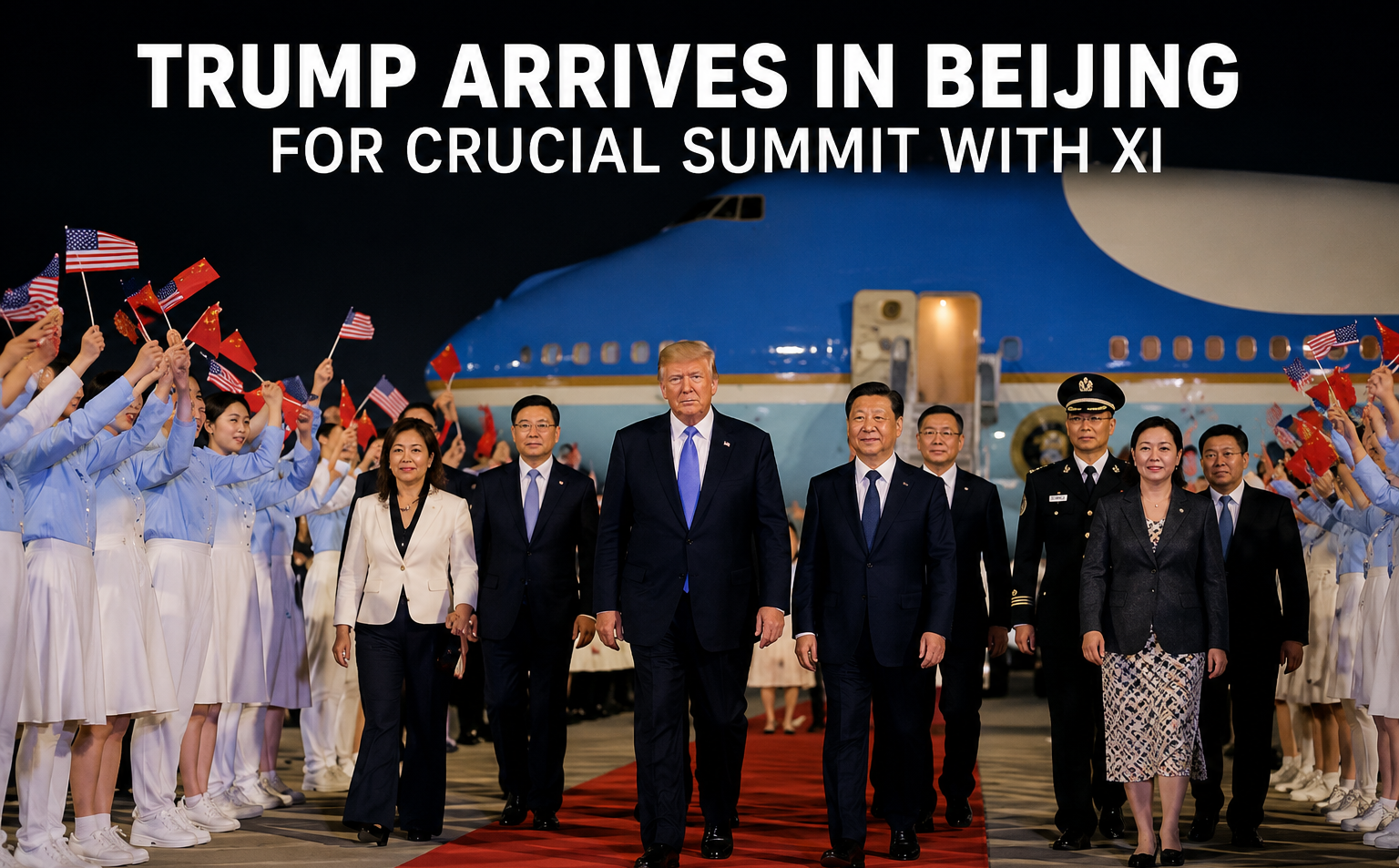
Trump Arrives in Beijing for Crucial Summit With Xi Amid Global Tensions
BEIJING: US President Donald Trump arrived in Beijing on Wednesday for a major summit with Chinese President Xi Jinping, as both nations attempt to ease growing tensions over trade, Taiwan, artificial intelligence and the ongoing Middle East conflict. Trump landed aboard Air Force One at Beijing Capital International Airport around 7:50pm local time after a lengthy journey from Washington, marking the first visit by a sitting US president to China in nearly ten years. The high-profile visit comes at a sensitive moment for relations between the world’s two biggest economies, with disputes over tariffs, Taiwan and Iran continuing to strain ties. Trump’s trip had originally been scheduled for March but was delayed due to the escalating war in the Middle East. Despite the geopolitical tensions, Trump appeared heavily focused on business and technology partnerships. Nvidia CEO Jensen Huang reportedly joined the presidential delegation during a stop in Alaska, while Tesla and SpaceX chief Elon Musk also travelled with the US president. Artificial intelligence is expected to be one of the central topics during the summit. China remains restricted from purchasing Nvidia’s most advanced AI chips under US export controls imposed on national security grounds. During the flight to Beijing, Trump wrote on social media that he would urge Xi to “open up” China further so American technology leaders could expand opportunities in the country. Trump and Xi are scheduled to hold formal talks on Thursday morning at Beijing’s Great Hall of the People, followed by an official state banquet later in the evening. Additional meetings, including a working lunch and tea session, are planned for Friday before Trump returns to Washington. Speaking before departing the White House, Trump said he expected lengthy discussions with Xi regarding the Iran conflict, particularly given China’s strong economic ties with Tehran through oil imports. However, the US president also attempted to downplay differences between the two nations, saying he believed China had been “relatively good” regarding Iran and that Washington did not require Beijing’s assistance in handling the issue. China’s Foreign Ministry welcomed the visit, saying Beijing was prepared to “expand cooperation and manage differences” with the United States. Meanwhile, Chinese officials are reportedly becoming increasingly concerned about instability in the Middle East. Foreign Minister Wang Yi recently encouraged Pakistan to continue mediation efforts between Iran and the United States. Taiwan is also expected to dominate discussions after Trump indicated he planned to discuss US weapons sales to the self-ruled island with Xi — a notable shift from Washington’s longstanding policy of avoiding direct consultation with Beijing on such matters. Trade tensions are likely to remain another major focus of the summit. The two countries have been locked in a prolonged tariff dispute since Trump imposed sweeping duties last year, prompting retaliatory measures from China that pushed some tariffs above 100 percent. Both leaders are expected to discuss extending the temporary one-year tariff truce reached during their last meeting in South Korea, although analysts believe reaching a broader agreement may prove difficult. China’s restrictions on rare earth mineral exports and agricultural trade are also anticipated to be part of the negotiations. Security across Beijing was visibly tightened ahead of the summit, with police stationed at major intersections and conducting identity checks on subway passengers. Many Chinese citizens view the meeting as highly significant. A traveller from Nanjing told AFP she hoped the talks would produce “lasting peace” despite growing global uncertainty. Trump has repeatedly highlighted what he describes as a strong personal relationship with Xi, claiming earlier this week that their ties could help prevent future conflict over Taiwan. The summit is being closely watched by Taiwan and key US allies across Asia for any indication of changes in Washington’s support for the island.
5/13/2026, 10:30:00 PM

ہنٹا وائرس: ایک نیا خطرہ، ایک نئے پینڈیمک کے آغاز کا خدشہ
کیا واقعی ایک نیا مہلک وائرس سامنے آ گیا ہے؟ دنیا بھر میں سوشل میڈیا پر ایک نام تیزی سے گردش کر رہا ہے — ہنٹا وائرس۔ کچھ پوسٹس میں دعویٰ کیا جا رہا ہے کہ یہ ایک نیا اور خطرناک وائرس ہے، جس سے مبینہ طور پر اموات بھی رپورٹ ہوئی ہیں اور یہ کسی نئی عالمی وبا کی ابتدا ہو سکتا ہے۔ ان دعوؤں نے آن لائن صارفین میں خوف اور تجسس دونوں پیدا کر دیے ہیں۔ کچھ لوگ اسے “نئے COVID جیسے خطرے” سے جوڑ رہے ہیں، جبکہ کچھ اسے خاموشی سے پھیلنے والا خطرناک وائرس قرار دے رہے ہیں۔ 🧩 اصل کہانی کیا ہے؟ رپورٹس کے مطابق ہنٹا وائرس سے منسلک چند کیسز ایک مخصوص بند ماحول (جیسے بین الاقوامی شپ یا محدود جگہ) میں سامنے آئے ہیں۔ ان کیسز نے ہی سوشل میڈیا پر بحث کو جنم دیا ہے۔ لیکن یہاں ایک اہم بات ہے جس پر بعد میں ماہرین روشنی ڈالتے ہیں۔ ⚠️ کیا یہ واقعی نئی عالمی وبا ہے؟ ابتدائی خدشات کے برعکس، عالمی ادارہ صحت World Health Organization نے صورتحال کو واضح کرتے ہوئے کہا ہے کہ: یہ کیسز محدود ہیں وائرس کا پھیلاؤ انسانوں میں آسان نہیں عام آبادی کے لیے خطرہ کم ہے کسی عالمی وبا کے شواہد موجود نہیں 🧬 پھر اصل وائرس ہے کیا؟ ہنٹا وائرس کوئی نیا وائرس نہیں بلکہ ایک پرانا اور نایاب وائرس ہے جو زیادہ تر: چوہوں اور جنگلی جانوروں کے ذریعے پھیلتا ہے انسانوں میں براہِ راست پھیلاؤ بہت محدود ہوتا ہے مخصوص حالات میں ہی انفیکشن کا باعث بنتا ہے ❌ سوشل میڈیا پر کیا دعوے ہو رہے ہیں؟ آن لائن پوسٹس میں یہ باتیں زیادہ گردش کر رہی ہیں: وائرس تیزی سے پھیل رہا ہے اموات کی تعداد بڑھ رہی ہے یہ نئی عالمی وبا بن سکتا ہے لیکن ابھی تک ان دعوؤں کی کوئی مستند تصدیق موجود نہیں۔ 🧠 ماہرین کی رائے ماہرین صحت کے مطابق یہ صورتحال زیادہ تر: ایک محدود آؤٹ بریک ہے جسے سوشل میڈیا پر بڑھا چڑھا کر پیش کیا جا رہا ہے اور اس سے غیر ضروری خوف پیدا ہو رہا ہے 📌 آخر میں حقیقت کیا نکلتی ہے؟ ابتدائی خوفناک دعوؤں کے باوجود موجودہ شواہد یہ ظاہر کرتے ہیں کہ ہنٹا وائرس کسی نئی عالمی وبا کا آغاز نہیں۔ یہ ایک محدود اور کنٹرول میں رہنے والی صورتحال ہے، جسے سوشل میڈیا نے زیادہ سنسنی خیز بنا دیا ہے۔ ⚠️ اہم نوٹ صحت سے متعلق معلومات ہمیشہ صرف معتبر ذرائع جیسے World Health Organization یا مستند نیوز اداروں سے ہی حاصل کریں۔ غیر تصدیق شدہ سوشل میڈیا پوسٹس اکثر غلط فہمی پیدا کرتی ہیں۔
5/13/2026, 4:00:00 AM