Rs15 Billion Drainage Projects Exposed as Rain Causes Waterlogging in Rawalpindi
Recent flooding on Sixth Road, Shamsabad, Pindora and IJP Road raises questions over effectiveness of newly completed drainage upgrades.
By Web Desk • Jun 09, 2026
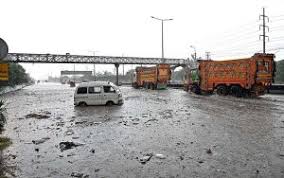
Newly built drainage systems on Sixth Road, Shamsabad, Pindora and IJP Road struggle as heavy rain blocks water flow and disrupts traffic.
RAWALPINDI: Heavy rainfall in Rawalpindi has once again caused severe waterlogging on major city roads, raising serious public concerns over recently completed drainage and road rehabilitation projects worth around Rs15 billion.
Key areas including Sixth Road, Shamsabad, Pindora, and IJP Road were among those that experienced significant water accumulation, leading to traffic congestion and disruption of daily life. These roads had recently undergone reconstruction and drainage improvement work, where large pipelines and upgraded sewerage systems were installed to manage rainwater flow more effectively.
Officials had earlier claimed that these development projects would significantly reduce urban flooding and improve the city’s ability to handle monsoon rainfall. The projects were widely presented as a long-term solution to Rawalpindi’s recurring drainage problems.
However, the latest rainfall has led to renewed questions from residents and commuters about the effectiveness of the newly developed system. In several areas, water failed to drain quickly despite the recent infrastructure upgrades, resulting in road blockages and inconvenience for the public.
Citizens have expressed frustration, saying that expectations from the development work were high, but recent conditions show that drainage problems continue to persist in key commercial and residential zones.
Experts point out that Rawalpindi’s drainage challenges are linked not only to infrastructure capacity but also to factors such as rapid urban expansion, blocked natural water channels, and maintenance issues in stormwater systems.
While authorities have not yet issued a detailed technical assessment of the recent waterlogging, development work and monitoring efforts are still ongoing in different parts of the city.
The situation has sparked renewed debate over planning, execution, and long-term sustainability of large-scale urban infrastructure projects, especially as monsoon rains continue across the region.