Government Launches New Fixed Tax Asaan Scheme for Small Traders Ahead of Budget
By Web Desk • Jun 05, 2026
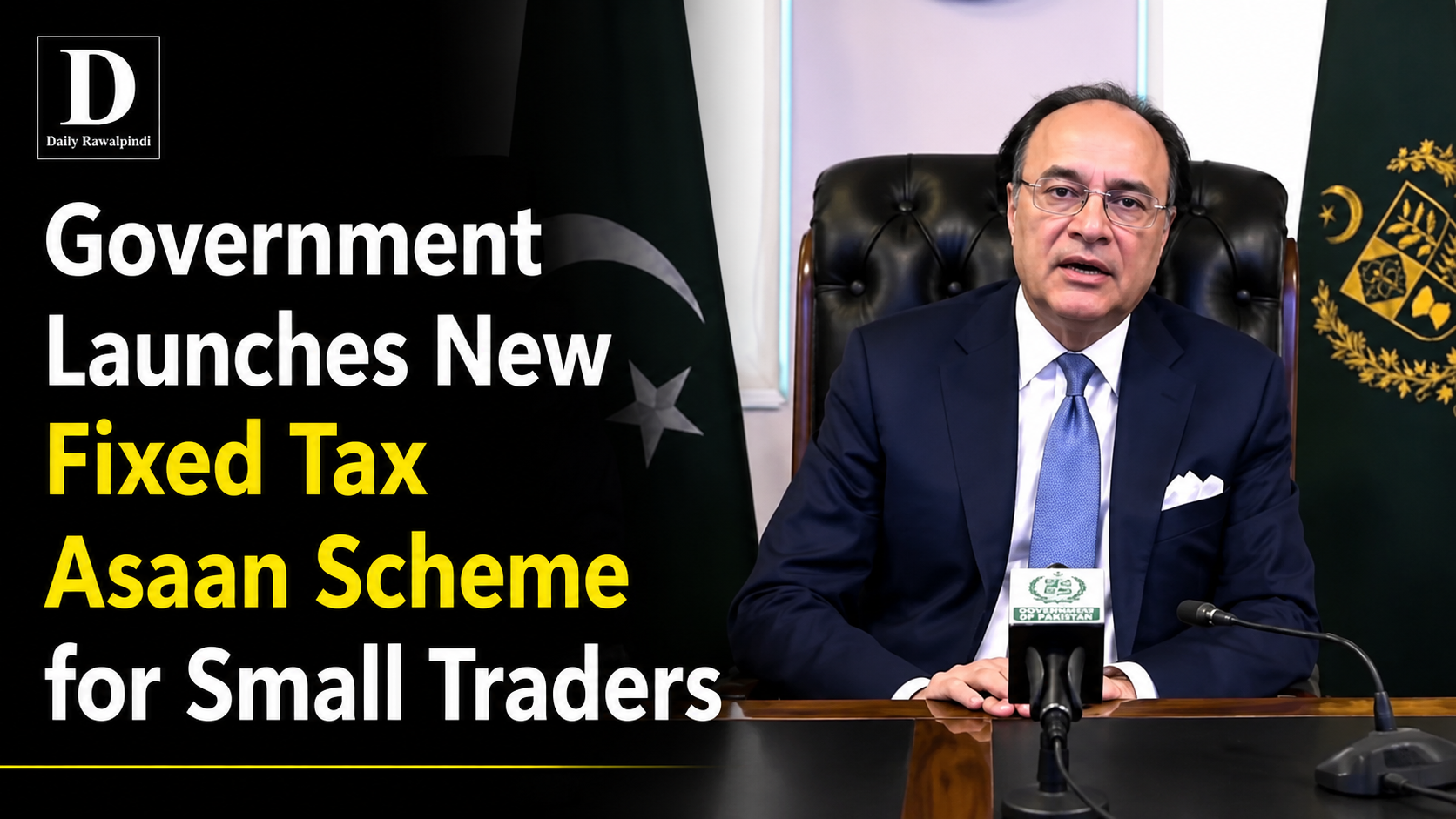
New 1% Fixed Tax Regime Announced for Small Businesses and Shopkeepers
The federal government has introduced a new tax initiative, the “Fixed Tax Asaan Scheme,” aimed at bringing small traders and shopkeepers into the tax net after previous efforts, including the Tajir Dost Scheme, failed to achieve the desired results.
The scheme was announced through a joint recorded message by Finance Minister Muhammad Aurangzeb, Minister of State for Finance Bilal Azhar Kiani, and Federal Board of Revenue (FBR) Member Hamid Attique Sarwar. Officials said the new framework was developed in consultation with trader organizations to provide a simpler and more practical tax compliance system.
Under the scheme, businesses with an annual turnover of up to Rs200 million will be eligible to pay a fixed tax of one percent through a simplified filing process. Tax forms will be made available in local languages to make compliance easier for traders across the country.
Finance Minister Aurangzeb explained that taxes already paid through withholding deductions would be adjustable against the payable amount, provided traders pay a minimum of Rs25,000 when submitting their tax return. If this condition is not met, the standard one percent tax rate will apply.
Participation in the scheme will remain voluntary. Traders may either join the new fixed tax regime or continue operating under the existing tax system. Those who opt into the scheme will receive a special identification plaque displaying their business details, registration number, National Tax Number (NTN), and a QR code.
According to the government, tax officials will be able to verify a business by scanning the QR code. Once verified, inspectors will not be permitted to enter the premises for routine tax inspections.
Bilal Azhar Kiani said traders registered under the scheme would be exempt from Point-of-Sale (POS) requirements and regular tax audits. Any disputes arising under exceptional circumstances would be resolved in consultation with the relevant traders’ associations.
Both existing taxpayers and non-filers will be eligible to participate, provided their annual turnover has not exceeded Rs200 million during any of the previous three years. Additionally, the minimum tax paid under the scheme must be higher than the amount paid in the preceding year.
The government also announced penalties for traders who remain outside both the fixed tax regime and the regular tax system. Such businesses will face fines of Rs10,000 in the first month, Rs25,000 in the second month, and Rs51,000 in the third month.
Officials stated that kiosks, pushcart vendors, and other very small traders will be exempt from the scheme.
FBR Member Hamid Attique Sarwar said Pakistan has approximately 4.4 million traders, with around 3.5 million expected to qualify for the new system. Larger Tier-1 businesses, particularly those operating under major brands, will not be eligible. The number of such businesses is estimated to be between 50,000 and 100,000.
Sarwar emphasized that many eligible traders currently pay little or no tax, and even modest contributions from this segment would help broaden the tax base and reduce pressure on existing taxpayers. He stressed that the initiative should not be viewed as a tax amnesty scheme.
To qualify, businesses must have been operating for at least three years, maintain a physical business location, and not fall under specialized professional service categories. Existing taxpayers who filed returns before 2025 may also join if they meet the eligibility requirements.
Registration will be available through the FBR website, mobile applications, and licensed tax practitioners. Participants will be required to maintain simple records of sales, purchases, expenses, and other business transactions.
The scheme also offers several incentives, including Active Taxpayer List (ATL) status, reduced withholding tax rates, and improved financial credibility, which may help traders access financing and business opportunities.
The announcement comes just days before the federal government presents the FY2026-27 budget on June 10. The upcoming budget is expected to be prepared under close scrutiny from the International Monetary Fund (IMF), which has repeatedly urged Pakistan to expand its tax base and improve revenue collection.