17 Terrorists Killed in Balochistan Operations After Quetta Train Bombing
Security forces target militant hideouts across four districts, recover weapons and explosives
By Web Desk • Jun 02, 2026
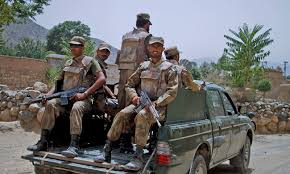
Operations launched following the deadly suicide attack on a shuttle train in Quetta.
Security Forces Kill 17 Terrorists in Balochistan Operations After Quetta Train Bombing
Pakistan's security forces have killed 17 terrorists during a series of intelligence-based operations (IBOs) conducted across multiple districts of Balochistan in the aftermath of the deadly suicide bombing that targeted a shuttle train in Quetta, according to a statement issued by the Inter-Services Public Relations (ISPR) on Tuesday.
The operations were carried out in the districts of Mastung, Nushki, Khuzdar, and Kech, where security forces targeted several terrorist hideouts and operational locations. Following intense exchanges of fire, 17 militants were killed.
According to ISPR, the slain terrorists belonged to what Pakistan refers to as "Fitna al-Hindustan," a term officially adopted by the state for terrorist groups operating in Balochistan that Islamabad alleges receive support from India.
Security forces also recovered a significant cache of weapons, ammunition, explosives, and improvised explosive devices (IEDs) from the militants. The military stated that those killed had been involved in numerous terrorist activities across the province.
The operations come days after a devastating vehicle-borne suicide attack struck a shuttle train near Chaman Phatak in Quetta on May 24. The bombing killed at least 14 people and injured 20 others, including women and children, according to official figures. Three Frontier Corps personnel were among those killed, while most victims were civilians travelling on or near the train. Several train coaches derailed and caught fire following the explosion.
The banned Balochistan Liberation Army (BLA) claimed responsibility for the attack, which was widely condemned by Pakistan's political and military leadership. Prime Minister Shehbaz Sharif and President Asif Ali Zardari described the bombing as a cowardly act of terrorism targeting innocent civilians and vowed that those responsible would be brought to justice.
ISPR reaffirmed that sanitisation operations remain underway to eliminate terrorist elements from the affected areas. The military added that Pakistan's counter-terrorism campaign under the "Azm-e-Istehkam" strategy will continue at full pace to dismantle terrorist networks and eliminate foreign-sponsored militancy from the country.
The latest operations follow another successful counter-terrorism action last month in Barkhan district, where a Pakistan Army major and four soldiers embraced martyrdom during an area sanitisation operation. Seven terrorists were killed during that engagement, which was jointly conducted by the Pakistan Army and Frontier Corps Balochistan.
Pakistan has witnessed a renewed surge in terrorist violence since the return of the Afghan Taliban to power in Afghanistan in 2021. Pakistani authorities have repeatedly expressed concerns over militant groups allegedly using Afghan territory as safe havens to launch attacks inside Pakistan, particularly the outlawed Tehreek-e-Taliban Pakistan (TTP). Islamabad has consistently urged the Afghan interim government to take decisive action against such groups, warning that cross-border terrorism remains a major threat to regional security.
Despite repeated counter-terrorism successes by security forces, officials maintain that sustained operations and regional cooperation are essential to preventing terrorist groups from regrouping and carrying out further attacks.